How long an AC should run on a hot Alabama day

Step 1 of 3: Equipment

On a hot Alabama day, your AC should run almost constantly, often 80 to 100 percent of the time, cycling off for only short stretches if at all. That's normal, not a sign of trouble. When it's 95 degrees outside with heavy humidity, the system has to keep pulling heat and moisture out of your house nonstop just to hold the indoor temperature steady, and it may never fully catch up until the sun goes down. What matters more than runtime alone is whether your home is actually cooling. If the AC runs all day and the house still feels warm, or the air coming out of the vents doesn't feel cold, something is working harder than it should, like a dirty coil, low refrigerant, or a struggling capacitor. With power costs what they are here, a unit running long hours and still losing ground is costing you money for nothing. Regular maintenance catches that kind of strain before a July afternoon turns into a breakdown.


A man in a gray sweater reclines in a brown leather armchair with his eyes closed, beside a wooden side table holding a mug, a folded newspaper and a potted plant, with a bookshelf and sunlit window behind him.
A man with greying hair and a dark sweater leans back on an armchair with his eyes closed and a slight smile, in a living room with a bookshelf, plant, folded newspaper and mug on a wooden table.
A man in a gray fleece jacket sits reclined in a leather chair with his eyes closed, in a room with bookshelves, a table lamp, a window, and a desk holding a folded newspaper and a dark mug.
A bearded man in a gray fleece pullover sits with eyes closed in a brown leather armchair in a living room, with a floor lamp, bookshelf, potted plants, a side table holding newspapers and a dark mug, and a bright window behind him.

Why does your house still feel sticky with the AC running

If the air coming out of the vents feels only cool instead of cold, or the house stays humid even with the system running almost nonstop, something is off. You might notice the upstairs bedrooms staying warmer than the living room, or the thermostat reading 72 while the air still feels thick. Some homeowners hear the outdoor unit running longer than usual, or notice the system short cycling, shutting off and restarting every few minutes instead of running one long stretch. Ignored long enough, a system working that hard without relief can freeze its coil or strain the compressor, and either one turns a maintenance visit into a repair bill. On a day this hot, that strain shows up fast.

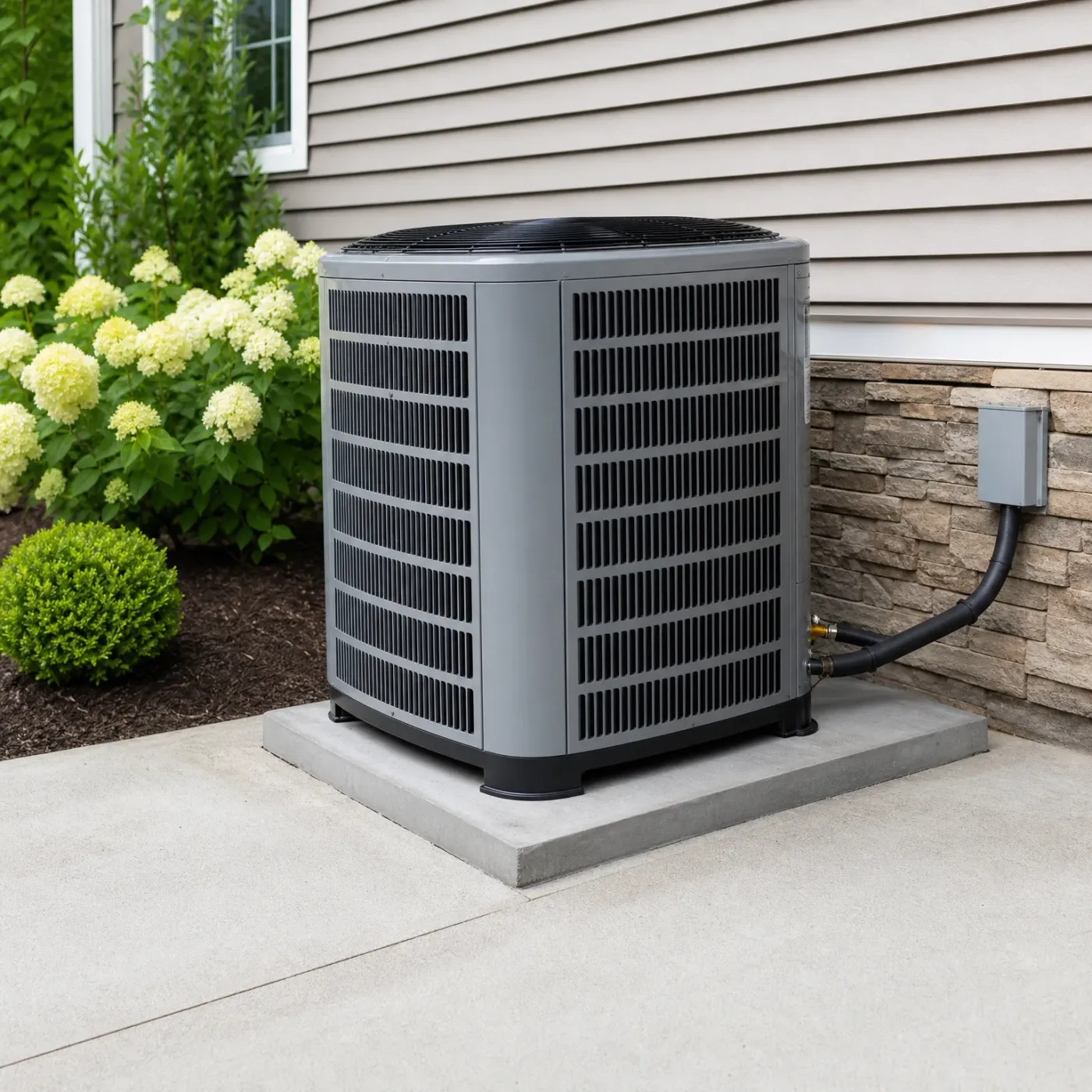
A gray outdoor air conditioning condenser unit on a concrete pad beside a house with horizontal siding and a stone veneer base, with refrigerant line and electrical disconnect box on the wall and flowering shrubs to the left.

Running long, keeping up

This unit cycling almost all day on a 95 degree afternoon is doing its job. The coils and fins are clean, the pad is level, and the lines run straight into the wall. Cool air keeps coming, the house holds its temperature, and the long runtime is just the system working.

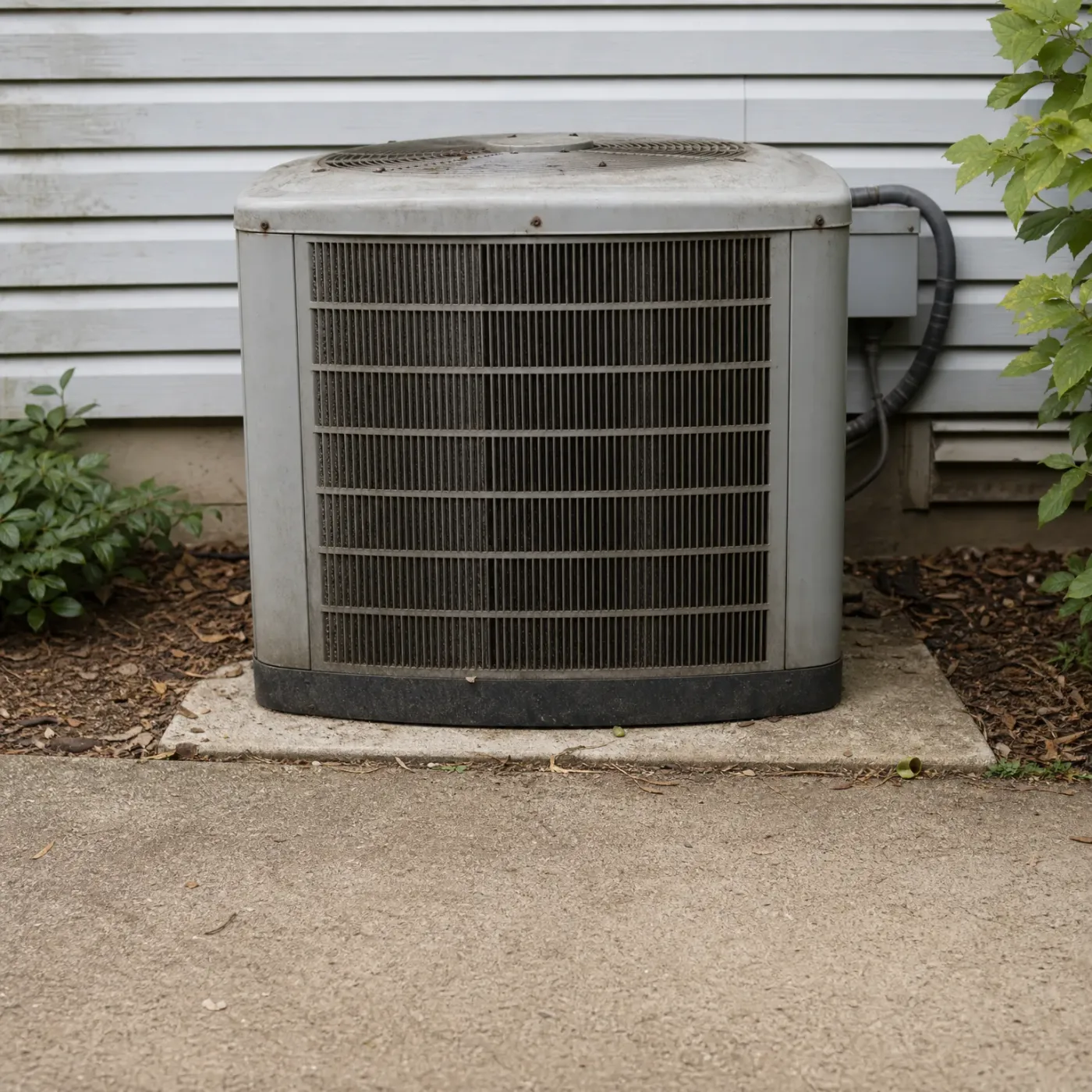
An outdoor air conditioner condenser unit on a concrete pad beside a house with light gray horizontal siding, with mulch and green shrubs on either side and a concrete walkway in the foreground.

Running long, falling behind

Dirt packed into the fins and years of weather on the casing make this unit work harder for less cooling. It may run just as long as a healthy one, but the house stays warm anyway. That gap between runtime and results is what maintenance catches early.

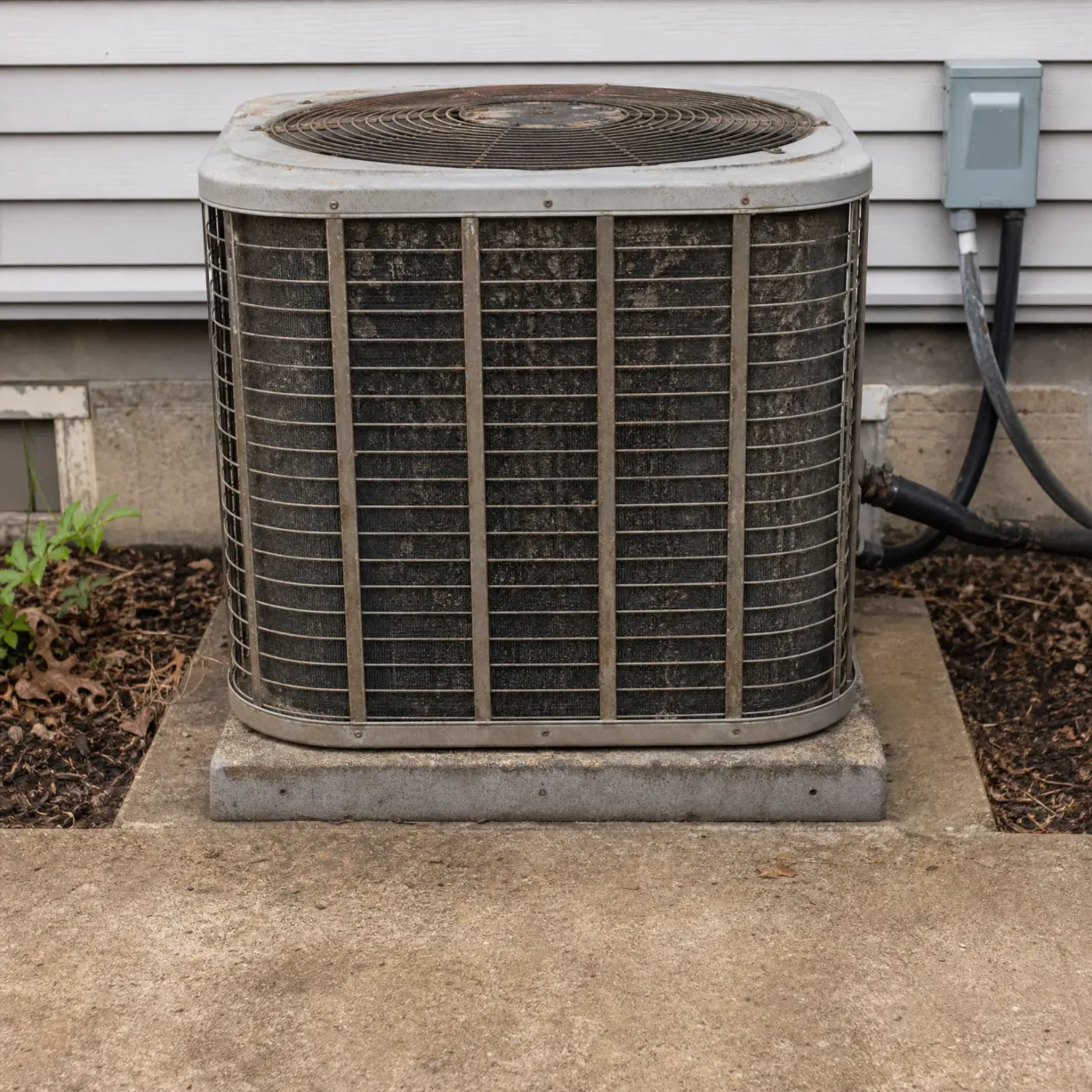
A weathered outdoor air conditioning condenser unit on a concrete pad beside a house with light horizontal siding, an electrical disconnect box and conduit on the wall, and mulched soil on either side.
Before you get your air conditioner maintenance
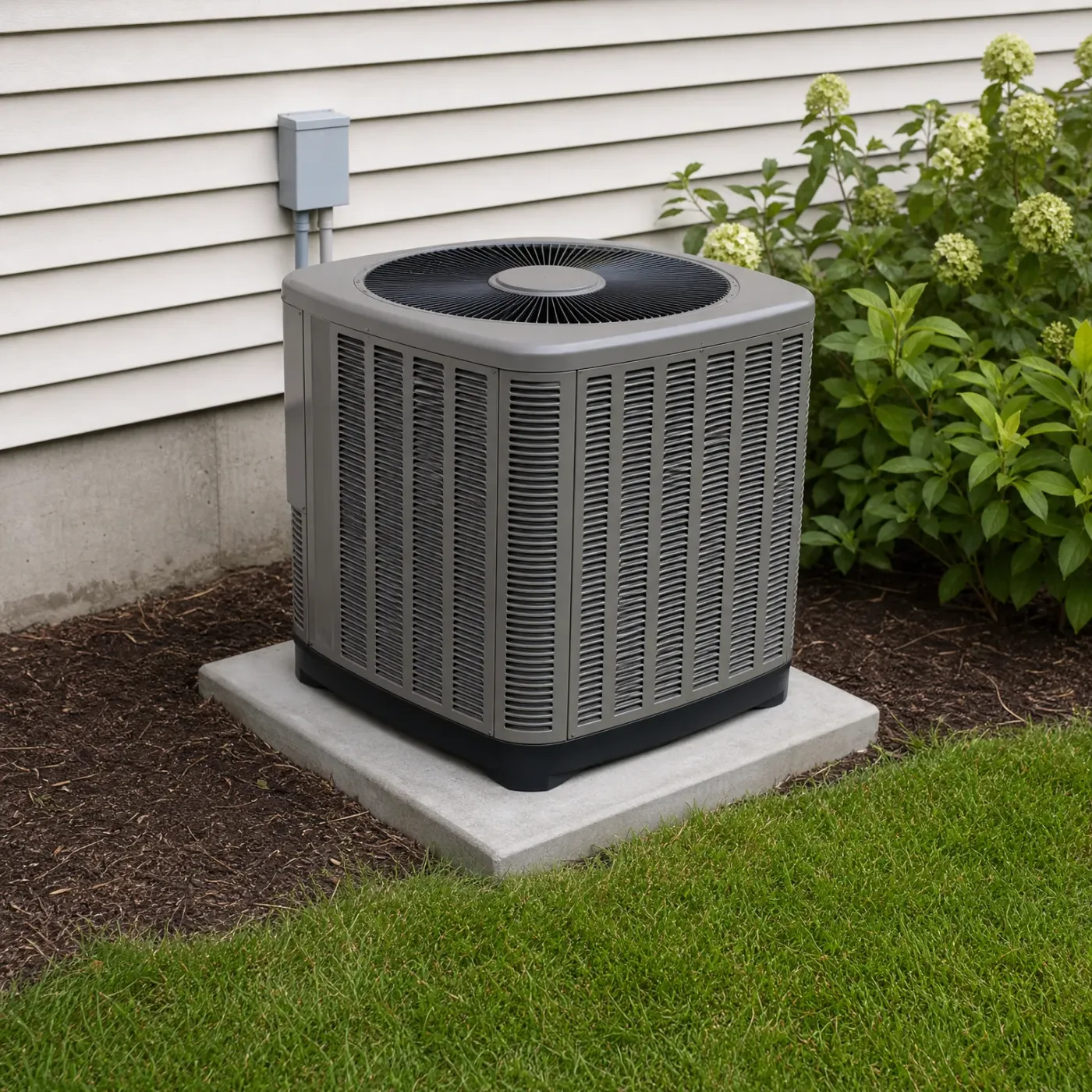
A gray outdoor air conditioner condenser unit on a concrete pad beside a house with horizontal vinyl siding, surrounded by mulch, flowering shrubs, and lawn.
After you get your air conditioner maintenance

Keeping up or falling behind

Running long, but keeping up

  • The house still cools down to your setpoint, even if it takes until evening on the hottest days.
  • Air coming out of the vents feels genuinely cold, not just cooler than the room.
  • Humidity stays in check, so floors and countertops don't feel damp or sticky.
  • The unit cycles off for a while overnight once the outside temperature drops.
  • Your power bill tracks with how hot and humid the month was, nothing more.

Running long and losing ground

  • The thermostat says 72 but the house feels closer to 78, no matter how long the system runs.
  • Air from the vents feels room temperature or just barely cool, not cold.
  • Humidity lingers, so you notice it on your skin or see it fogging the bathroom mirror long after a shower.
  • One room, often upstairs, stays warmer than the rest of the house all day.
  • The outdoor unit runs nonstop even after the sun goes down and the temperature outside has dropped.
A single-story red brick house with a white door and three white-framed windows, fronted by an asphalt parking area with sun flare, surrounded by green deciduous trees under a bright hazy sky.

Summer air in Alabama carries a dew point that averages 69°F across June, July and August, a figure that comes from NOAA climate records. At that level the air feels heavy even when the thermometer doesn't look that bad, and your AC has to pull a lot of moisture out before the house feels dry. That's extra work on top of cooling, which is part of why the system runs as long as it does on a hot day. A coil caked with dust or a low refrigerant charge can't pull that moisture out as well, so the air keeps feeling damp no matter how long the unit runs.

NASA POWER T2MDEW county cells weighted by homes

Send one request and you're done looking

A unit that runs long on a 95 degree day is working as it should, but a unit that was never checked is guessing at that work instead of doing it clean. Dirty coils, a low charge, or a clogged filter all make the system run that same long stretch while cooling less and costing more to do it. You can't see any of that from the thermostat. Maintenance is how a contractor finds it before July does. Right now that means calling around Alabama for someone licensed, waiting to hear back, explaining the same thing more than once, and weighing quotes against each other while the heat and the power bill keep climbing. Send the request once and that work is off your plate. Your AC keeps running most of the day either way. What maintenance decides is whether that time is spent cooling your house or just struggling to.

Long Runtime Isn't the Problem

  • Long run times on a 95 degree Alabama day are normal, not a sign your AC is struggling.
  • A unit that keeps the house at setpoint and pulls humidity down is doing its job, however long it runs.
  • Short cycling, warm vents, or a house that never quite cools point to a real problem, not just a hot day.
  • Dirty coils, a low charge, or a clogged filter can all hide behind that same long run time.
  • Maintenance is how you find out which one you've got before the hottest part of summer arrives.
  • Knowing the difference now means you're not guessing when the bill comes or the house stays sticky.

A long runtime on a 95 degree Alabama afternoon tells you almost nothing by itself. The question that matters is what the house feels like while that unit runs. If the setpoint gets reached, if the air at the vents is genuinely cold, if the humidity stays down so the floors and countertops aren't damp to the touch, that long stretch of runtime is just the system doing what Alabama summers ask of it. Nothing to fix there. But the same long runtime can be covering for a unit that's struggling. Dirty coils, a low refrigerant charge, a clogged filter: any of these will make a system run just as long while falling short on the actual job, cooling the air and pulling the moisture out of it. From outside, a unit running hard because it's healthy and a unit running hard because it's failing look identical. The only way to tell them apart is to have someone check the coils, the charge, and the airflow before the hottest stretch of the year arrives, not after the bill comes in high or a room upstairs stops cooling. That's what maintenance is for here. Not fixing a problem you already know about, but finding out which kind of long runtime you're dealing with while there's still time to do something about it.

A gray-haired man with a beard in a blue button-placket shirt reclines on a couch with his eyes closed, beside a sunlit window with a green plant.
A woman in a cream knit sweater sits in an armchair with her eyes closed near a window showing yellow autumn foliage, with a mug on a round wooden side table beside her.

Finding a pro stops being your job

A long run time on a hot day doesn't tell you whether your AC is in good shape. Maintenance does, by checking the charge, the coils, and the filter instead of guessing. Skip calling around for someone to do it and send the form instead. One request gets you matched with a licensed contractor, no list of companies to sort through, no explaining the same thing twice. You still have to get the unit serviced. You just don't have to find who does it.

I'm done searching

One form instead of hunting for a pro who does air conditioner tune-ups.

You only hire the pro if you want to.