
Profile view of a bearded man wearing a black baseball cap and a dark gray T-shirt against a plain light background.

Signs of a bad AC capacitor in Alabama

Step 1 of 3: Equipment

A bad AC capacitor usually shows up as the outside unit humming but not starting, the fan running while the compressor stays silent, or the whole system clicking and trying to start every few minutes without catching. Sometimes the air runs warm because the compressor never kicks in at all. The capacitor stores the charge that gets the compressor and fan motor moving, and heat wears it down faster than almost anything else, which matters here since the unit is working hard most of the year in Alabama's humidity. Once it weakens, the motors it's supposed to start draw more power trying to turn over, which raises your electric bill even before the system quits for good. Left alone, a failing capacitor usually ends in the AC not starting at all on a hot afternoon. Catching it at the humming or clicking stage is what keeps this a small, cheap fix instead of a no-cooling emergency.

A bearded man in a plaid flannel shirt stands in a kitchen looking out a window toward snow-covered shrubs, with a steaming mug on the windowsill and potted plants on a shelf behind him.
A smiling man with dark curly hair in a navy t-shirt sits on a gray couch indoors, with a large-leafed plant and a window in the background.
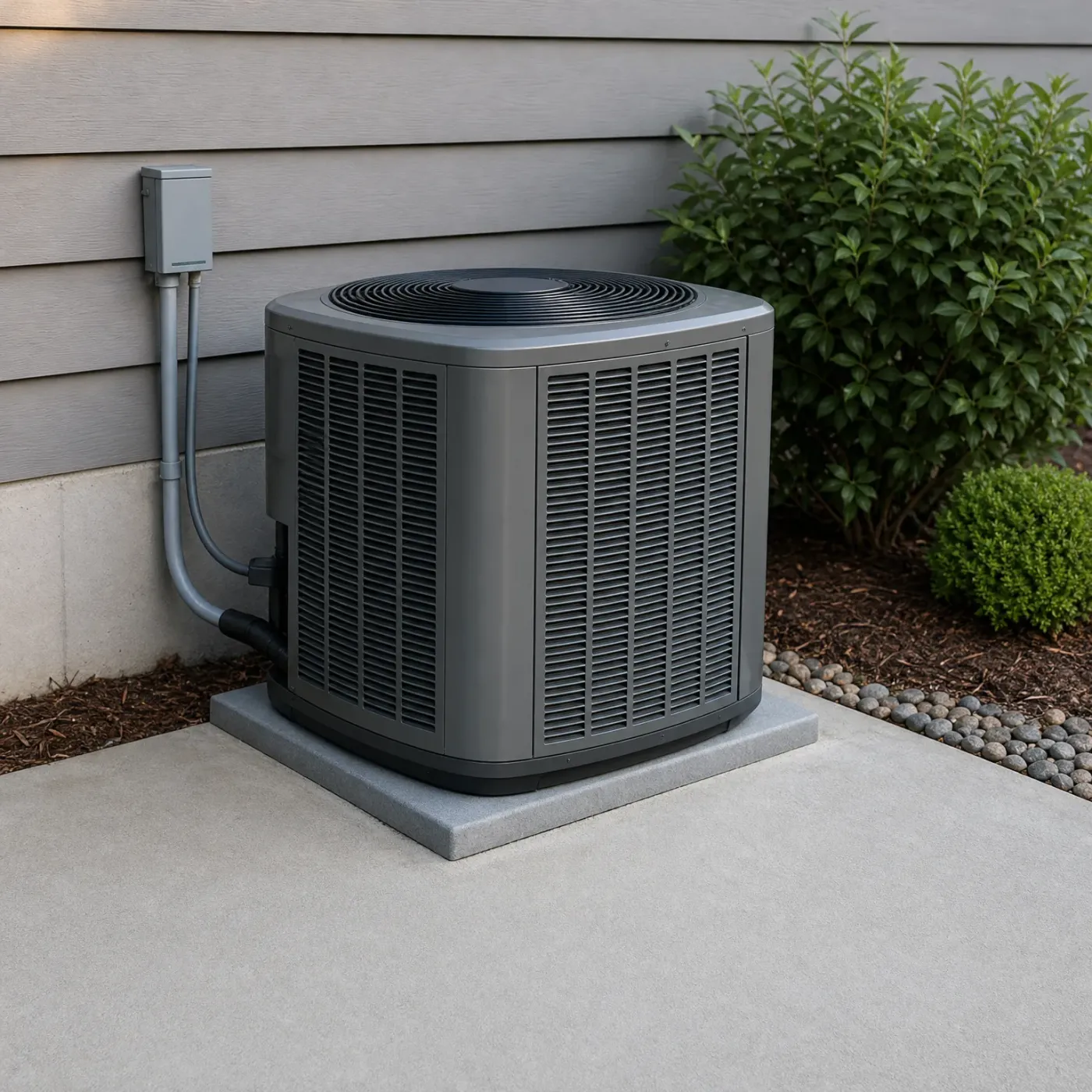
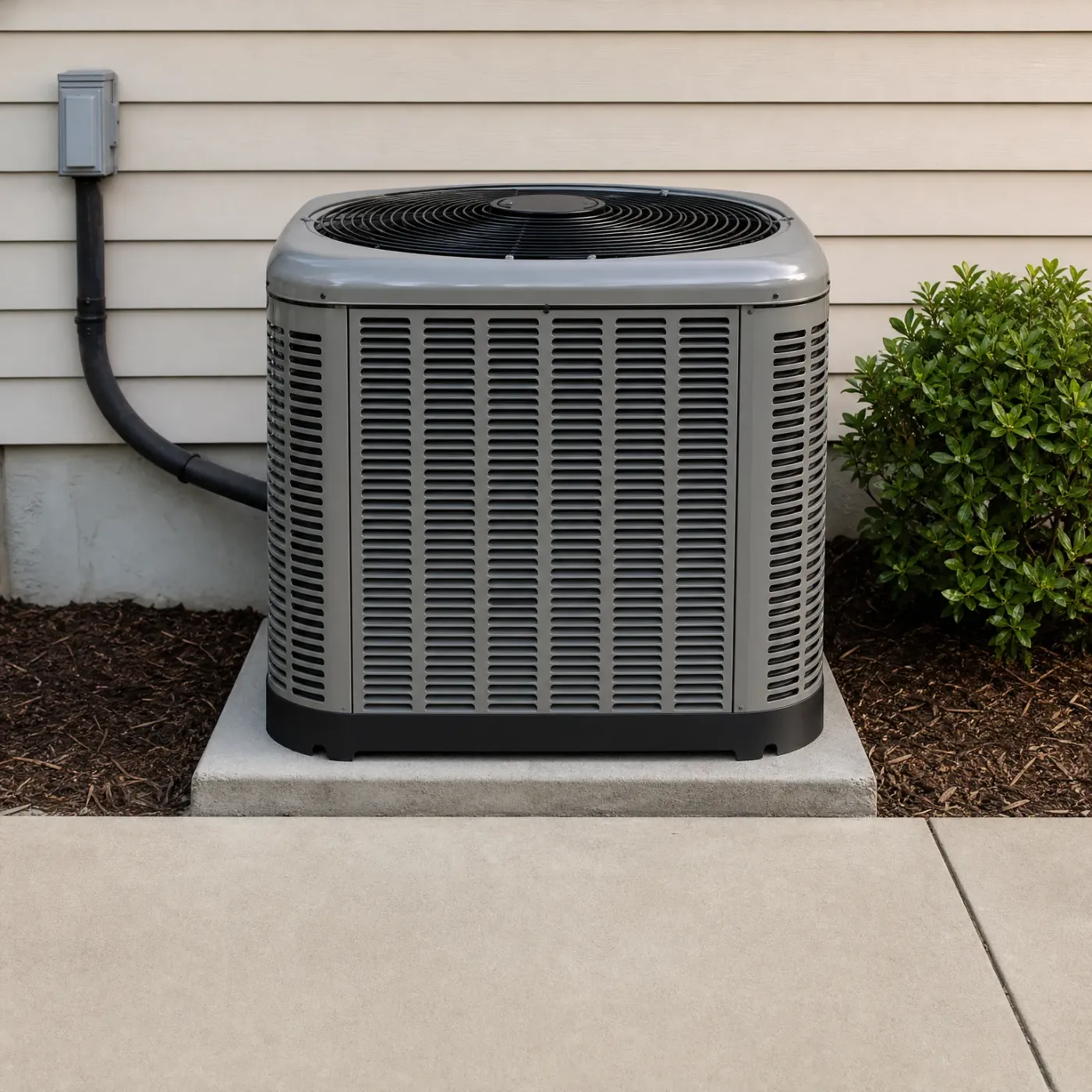
A gray outdoor air conditioning condenser unit on a concrete pad beside a house with horizontal lap siding, with a conduit and electrical disconnect box on the wall and a green shrub in mulch to the right.

Capacitor still good

The unit starts right up when the thermostat calls for it. The fan spins and the compressor kicks in within a second or two, no hesitation, no clicking. It runs straight through until the house hits temperature, then shuts off clean.
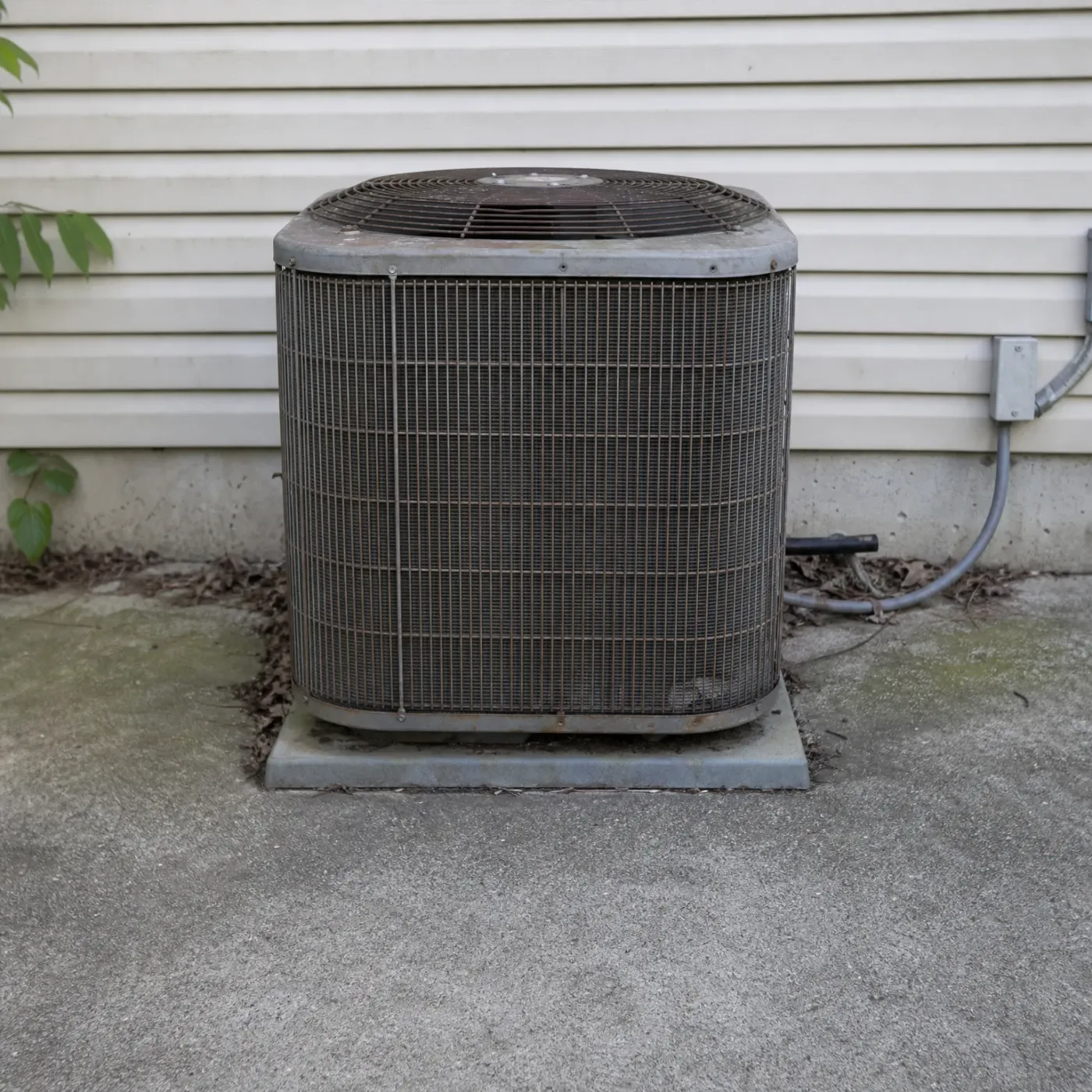
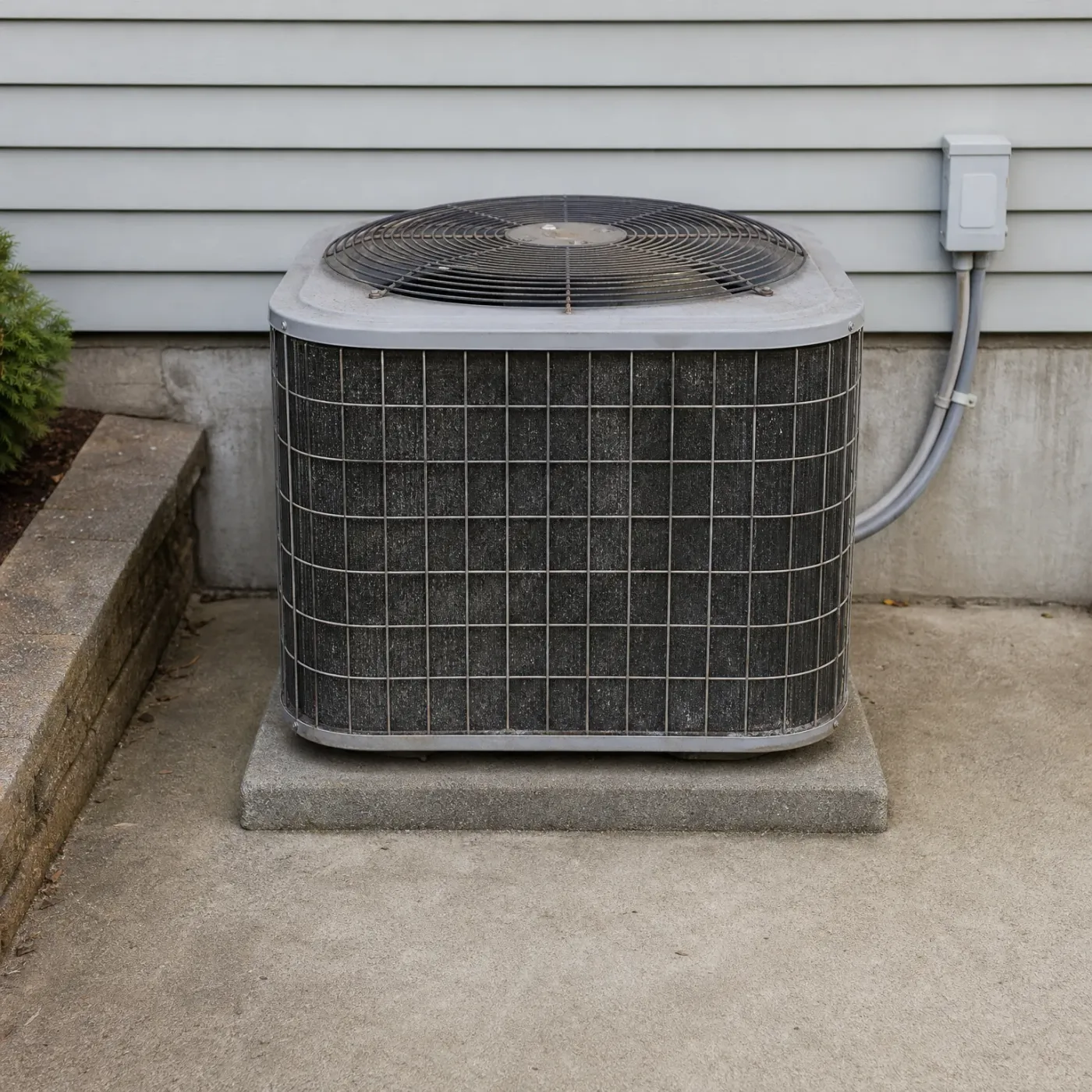
A weathered outdoor air conditioner condenser unit on a concrete pad beside a house with horizontal vinyl siding, with a conduit and disconnect box on the wall to the right.

Capacitor failing

The fan may spin while the compressor stays quiet, or you hear a hum and nothing moves. The unit tries every few minutes and gives up each time. Some homes get warm air out of the vents because the compressor never actually starts.

Is my AC acting like this right now?

You go out to the unit and it's humming but the fan isn't moving, or the fan is spinning but the air coming out stays warm. Maybe the whole system clicks every few minutes like it's trying to start and giving up. Inside, the house is holding at 78 or climbing past it no matter where the thermostat is set. A capacitor that's failing doesn't always quit all at once. It can limp along for weeks, making the compressor work harder to start each time, and that extra strain is what turns a cheap part into a compressor replacement if it gets left alone through a full Alabama summer. If any of this matches what you're hearing or feeling in your house, the capacitor is worth checking before it goes completely.

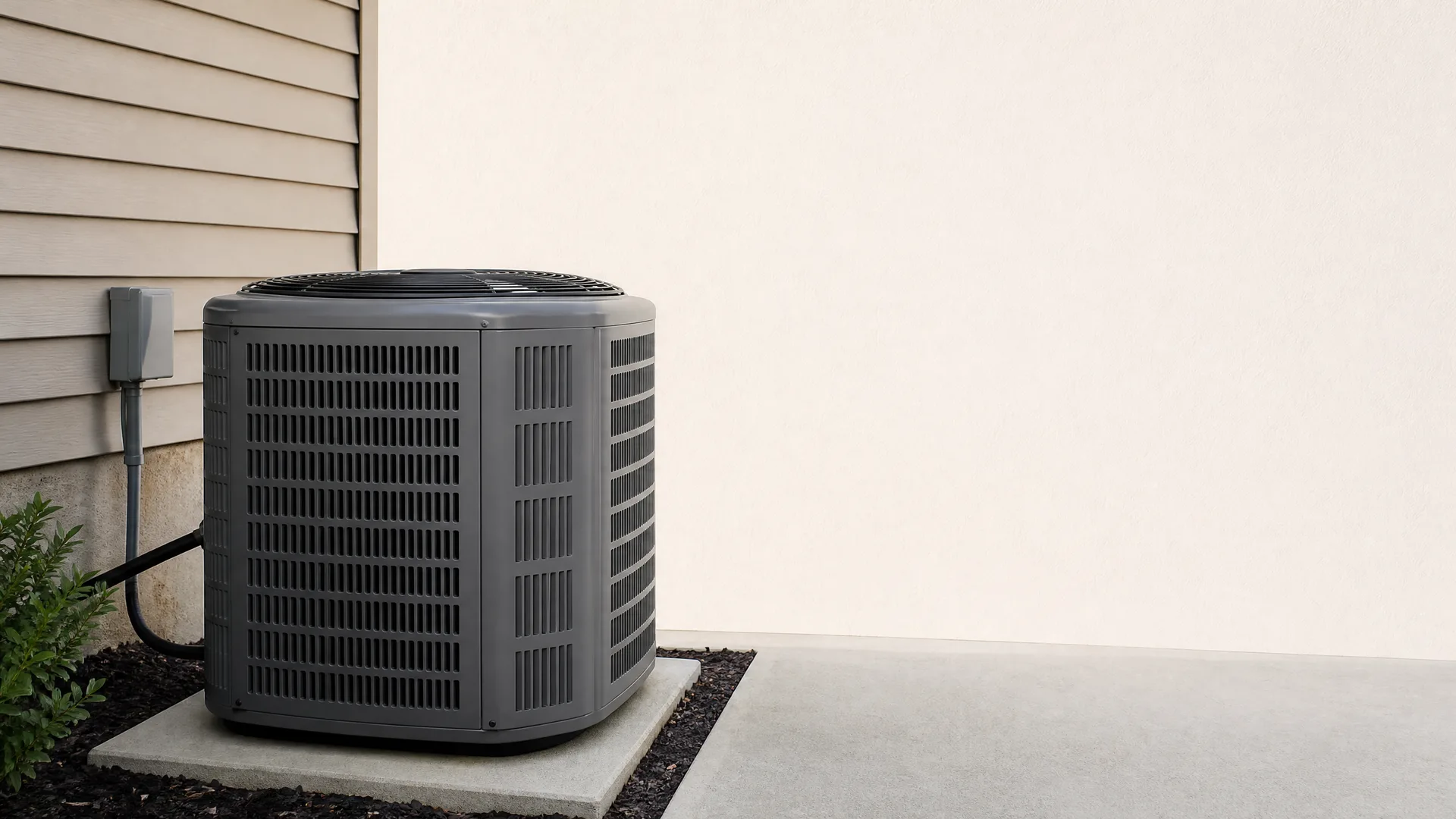
A gray outdoor air conditioner condenser unit on a concrete pad beside a house with horizontal siding and a light stucco wall, with a disconnect box and refrigerant lines on the wall and a shrub and mulch bed at left.

What the capacitor actually does

The capacitor stores a charge and releases it to give the compressor and fan motor the jolt they need to start spinning. A motor can't start turning on its own power alone, it needs that push. Once it's running, the capacitor keeps feeding it small corrections to keep the motor turning steady. When it weakens, the motor doesn't get enough of a kick to overcome its own resistance, so it just sits there and hums.

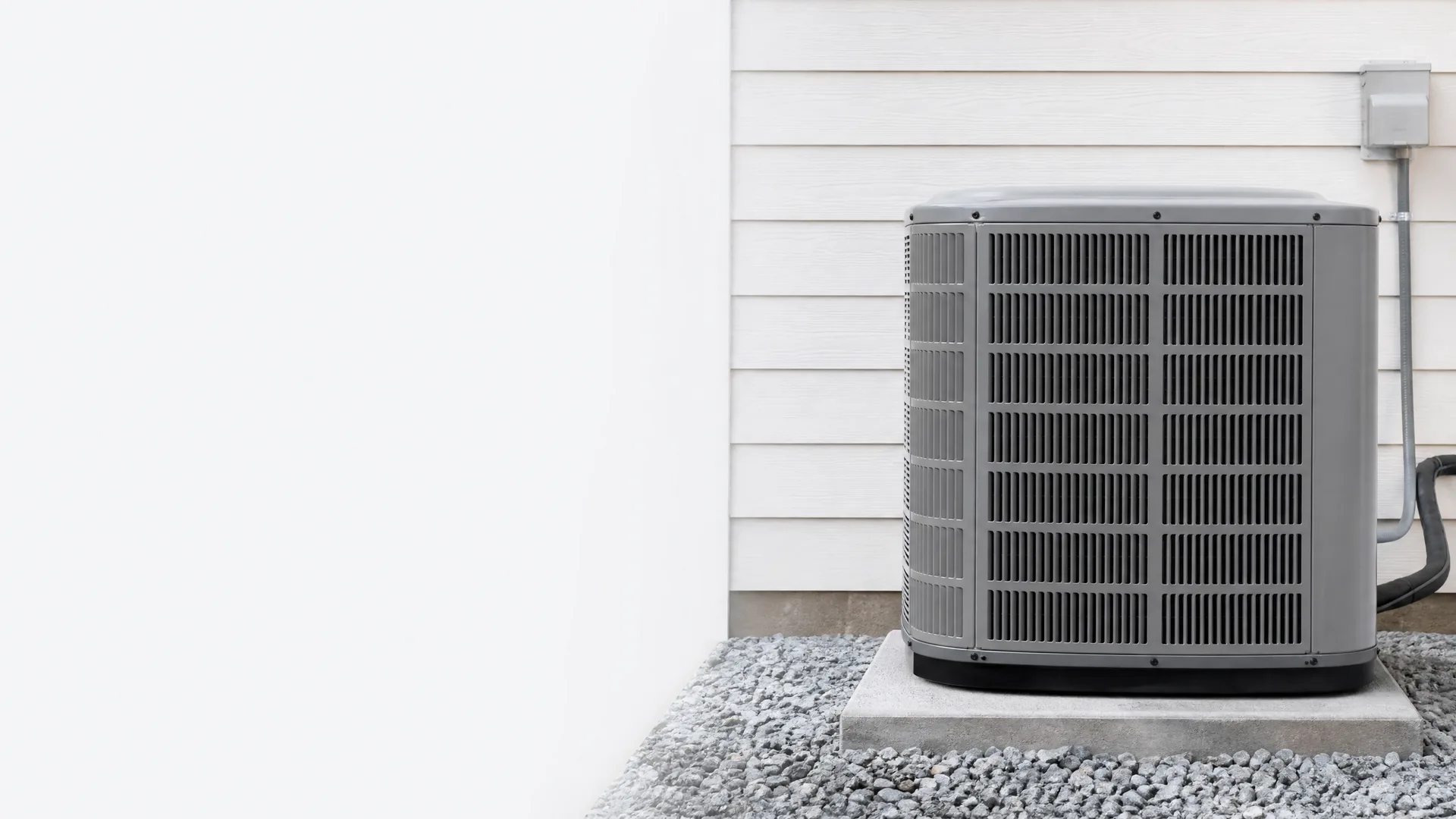
A gray outdoor air conditioning condenser unit on a concrete pad surrounded by gravel, next to a white horizontal-lap-sided house wall with an electrical box and conduit, against a blank white background on the left.

Why Alabama summers push it harder

A capacitor degrades a little every time the compressor starts and stops. In a Montgomery or Huntsville summer, that unit might cycle on and off dozens of times a day trying to keep up with the heat, especially if it's running from April into October. Each start draws down the capacitor a bit more. A unit in a mild climate might start half as often in a year, which is why capacitors in Alabama tend to wear out faster than the manual suggests.

Fix It Now or Risk It

Wait it out

  • A weak capacitor can keep limping along for weeks, starting the compressor late or not at all on the first few tries.
  • Every hard start without enough charge puts extra strain on the compressor windings, and a compressor replacement costs far more than the part that was supposed to protect it.
  • In an Alabama summer the unit may be trying to start a dozen times a day, so the wear adds up fast.
  • While it struggles to start, the house takes longer to cool, and with electricity rates here that shows up on the bill before the unit quits outright.
  • If it fails on a 95 degree afternoon, there's no cool air until someone gets out to replace it.

Get it checked now

  • A capacitor is a small, low-cost part to swap once a contractor confirms that's what's failing.
  • Replacing it before the compressor takes repeated hard starts protects the more expensive part of the system.
  • A contractor can test the capacitor's reading against its rating in a few minutes and tell you straight whether it's weak.
  • Catching it early means the AC keeps running through the Alabama summer instead of quitting on the worst possible day.
  • Once it's swapped, the humming, clicking, and warm-air starts stop, because the compressor and fan are getting the jolt they need.
A woman in a gray turtleneck sweater stands by a window looking outside at snowy ground, with a dimly lit living room containing a sofa, shelves, lamp and a lit candle behind her.
A woman in a cream cable-knit turtleneck sweater stands in a warmly lit living room with a fireplace and shelves behind her, looking out a window toward snow-covered trees and a railed deck.
A woman in a cream knit turtleneck sweater stands by a window looking out at snow, with a lit fireplace, sofa and lamp in the room behind her.
A woman in a gray knit sweater sits by a window looking out at falling snow, with a dimly lit living room containing a sectional sofa, pillows, a lamp and houseplants behind her.

The right pro for this job

A capacitor that's starting to go doesn't fix itself, and in Alabama that matters more than it would somewhere mild. Your AC is working most days from April through October here, and every one of those hot afternoons asks the compressor to start under a hard load. A capacitor that's hesitating now is more likely to quit outright on a 95 degree day than a cool one, usually right when the house needs it most. Power in Alabama already costs more than a lot of places, and a compressor straining through weak starts pulls more of it, so the bill moves before the unit even fails. None of that gets better by watching it a while longer. If what's happening at your unit matches a bad capacitor, the faster this gets into a contractor's hands, the sooner you're not the one managing it.

Running it hot versus catching it early

You can keep an eye on a capacitor that hums or clicks a little and decide to watch it another week. Some units do run that way for a while before anything stops. But a capacitor doesn't heal. Each hot start that doesn't catch clean puts load on the compressor windings, and that's the part that's expensive to replace. In an Alabama summer the unit might be asked to start thirty or forty times a day during the worst stretch, and a weak capacitor fails a little more of those tries as the days go on.

What changes once it's looked at

A technician can test a capacitor in a few minutes with a meter and know whether it's holding its rated charge or not. If it's weak, swapping it is a straightforward repair, not a system overhaul. The compressor and fan motor themselves are usually fine, they just haven't been getting the jolt they need to start clean. Once a good capacitor is in, the hard starting, the clicking, the humming without the fan moving, all of that stops. The unit goes back to starting the way it did when it was new.

An outdoor air conditioner condenser unit on a concrete pad beside a house with horizontal lap siding, with a conduit running to a gray electrical disconnect box on the wall.
Before you get your air conditioner repair
A gray outdoor air conditioner condenser unit on a concrete pad beside a house with horizontal lap siding, with a wall-mounted disconnect box and conduit at left and a green shrub and mulch bed at right.
After you get your air conditioner repair
  1. Thermostat calls for cooling and sends power to the unit

  2. Capacitor releases its stored charge into the compressor and fan motor

  3. That jolt spins the motors up to full speed in under a second

  4. Compressor runs steady while the capacitor holds a smaller charge to keep it going

Power costs 16.09 cents per kilowatt-hour statewide

At 16.09 cents per kilowatt-hour, every extra minute your compressor struggles to start shows up on the bill. A failing capacitor makes it try again and again, pulling power each time without doing the job. Catching it early costs you less than running it that way all summer.

EIA-861 2025 statewide residential average

A smiling man in a denim shirt and white t-shirt stands in an open dark doorway of a stucco house, facing a woman with long brown hair and a green jacket seen from behind in the foreground.

A humming unit or a compressor that won't catch is the capacitor talking

That's the answer. Humming with no start, a fan spinning over warm air, clicking every few minutes without catching. Any of those point to the capacitor, and none of them get better on their own.

Once you've matched what you're hearing outside to what's written here, you know enough to stop guessing. A contractor can confirm it with a meter in minutes and tell you whether it's the capacitor or something else pulling on it. Getting matched with one means you're not the one tracking down who's available and who isn't. You send the details once, and the next call comes to you.

A living room corner with a light beige sofa holding a textured taupe cushion, a large ceramic vase of olive branches by a window, a framed neutral artwork on the wall, and a dark bowl with stacked books in the foreground.
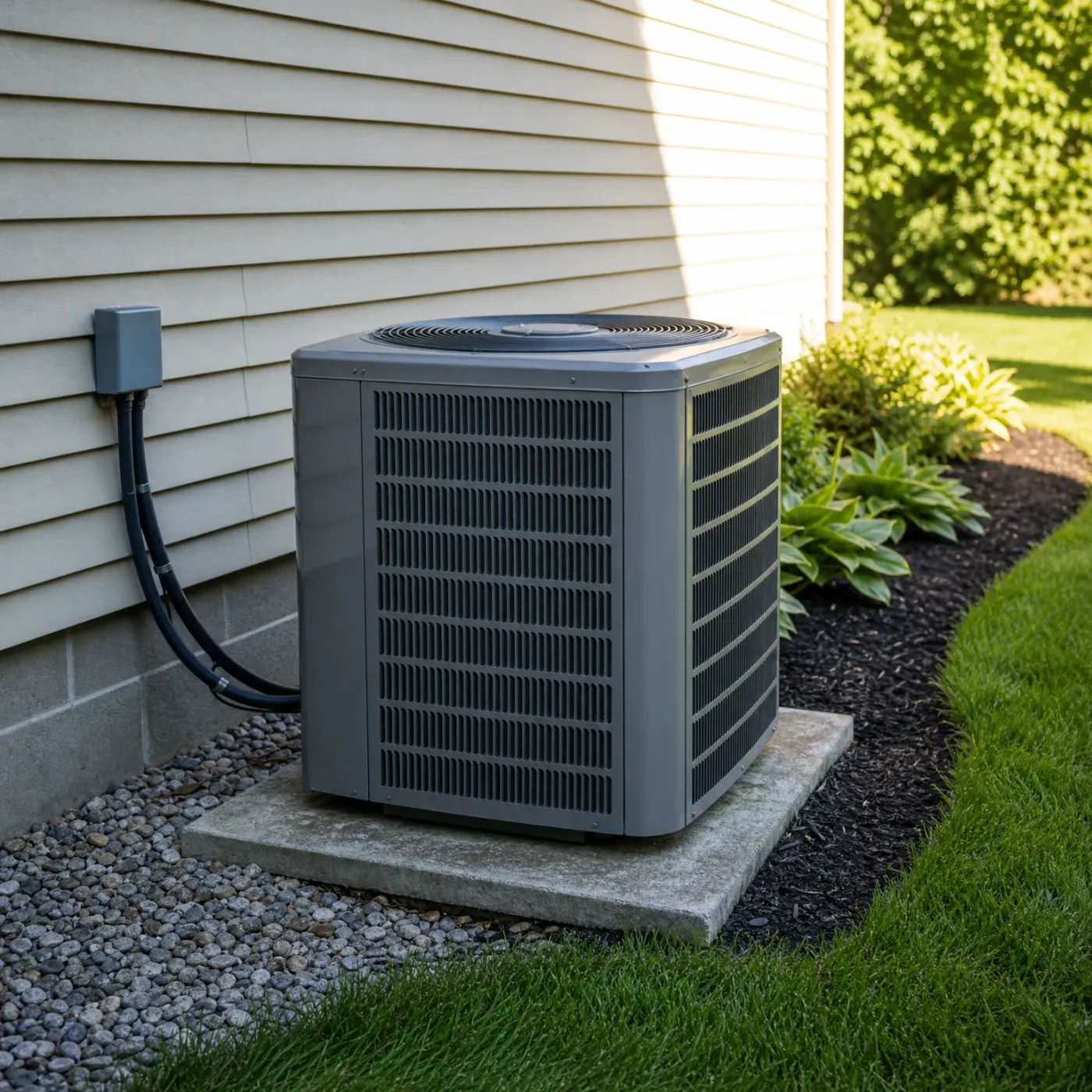
A gray outdoor air conditioning condenser unit on a concrete pad beside a house with light horizontal siding, with gravel, dark mulch, shrubs and lawn nearby and a conduit box on the wall.

Matched to your air conditioner job

Hand off the search

After you send the request, you're done searching.

You only hire the pro if you want to.