Why your AC outdoor fan isn't spinning in Alabama

Step 1 of 3: Equipment

A fan that won't turn usually means one of three things: the capacitor that gives the fan motor its initial kick has failed, the motor itself has burned out, or a tripped breaker or bad contactor is cutting power to the whole outdoor unit. Alabama summers run that fan hard for months straight, and the capacitor is usually what gives out first from the heat and the long hours. When it fails, the compressor inside the unit may still be running without the fan to pull heat off the coil, which can trip the system off on high pressure or damage the compressor if it keeps happening. With electric heat common here and power costs already high, a unit cycling on its compressor with no fan running wastes money fast and risks a bigger repair. Either way, the unit needs power cut at the breaker until someone can check the capacitor, the motor and the electrical connections feeding it.

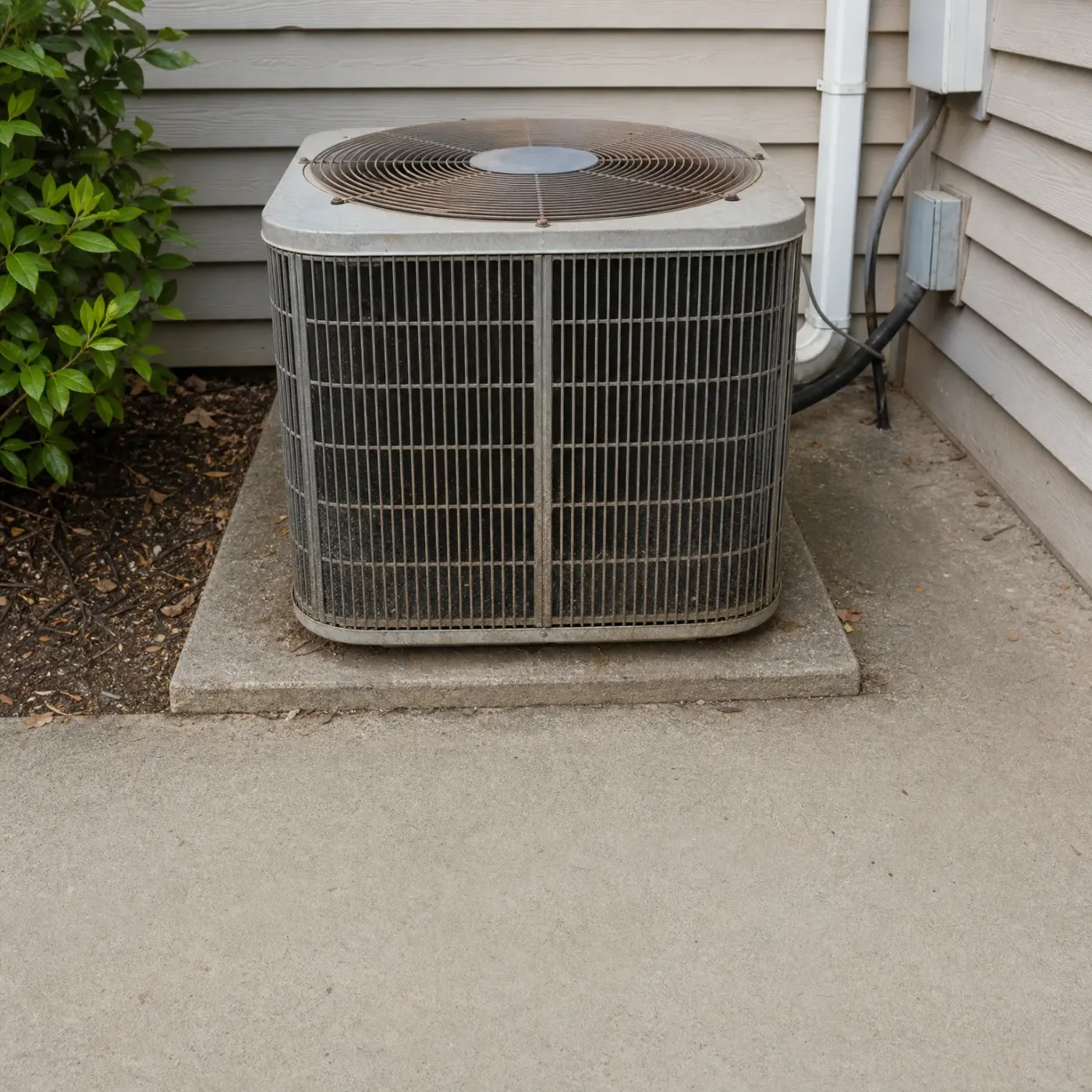
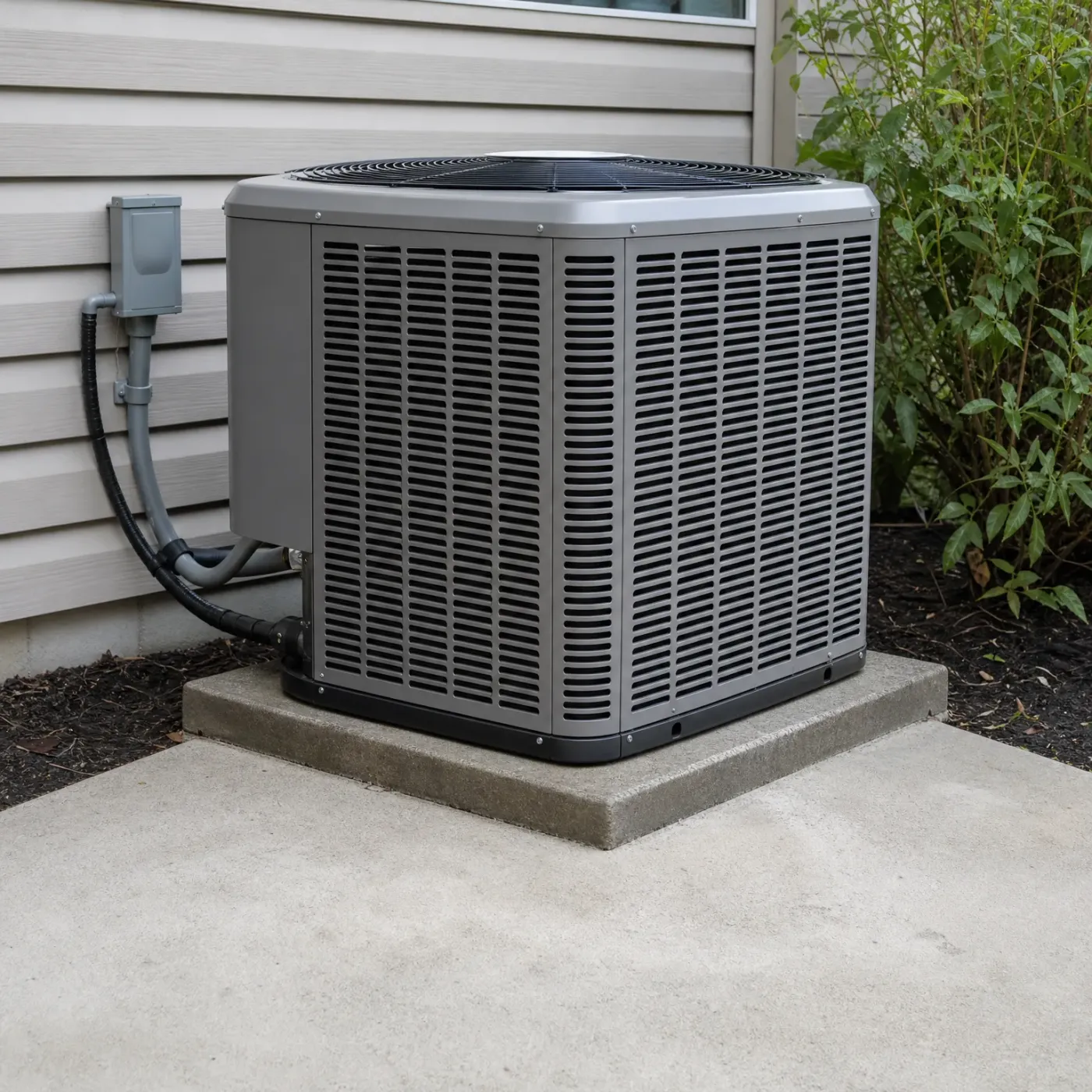
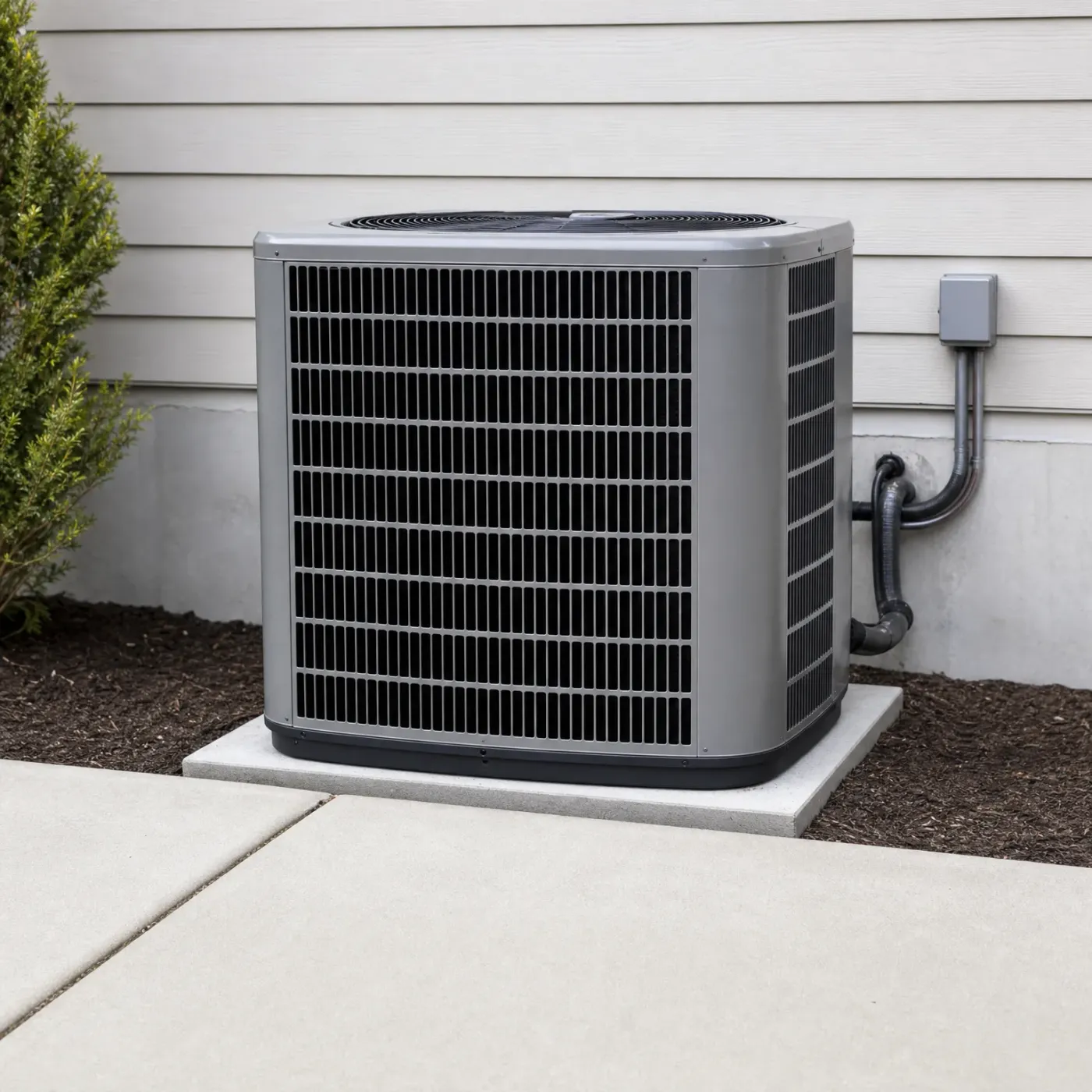
A gray outdoor air conditioner condenser unit sits on a concrete pad beside a house with horizontal lap siding, with conduit and an electrical disconnect box on the wall, dark mulch and a shrub to the left, and a concrete walkway in the foreground.

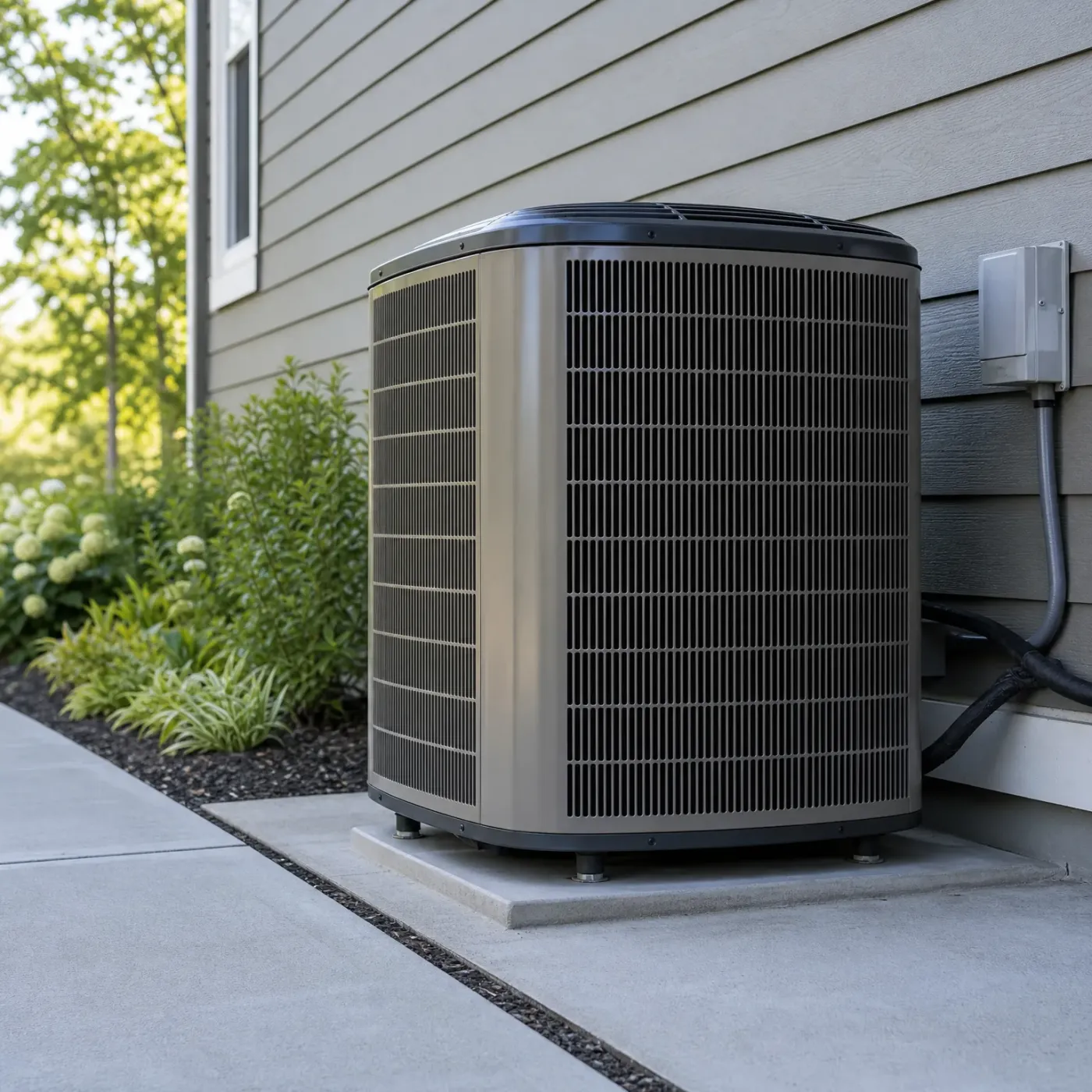
Fan spinning, unit running fine

This is what your outdoor unit should look like. The fan pulls air through the coil and throws heat off the refrigerant lines running into the house. If it's spinning and the air coming off the top is warm, the system is doing its job.

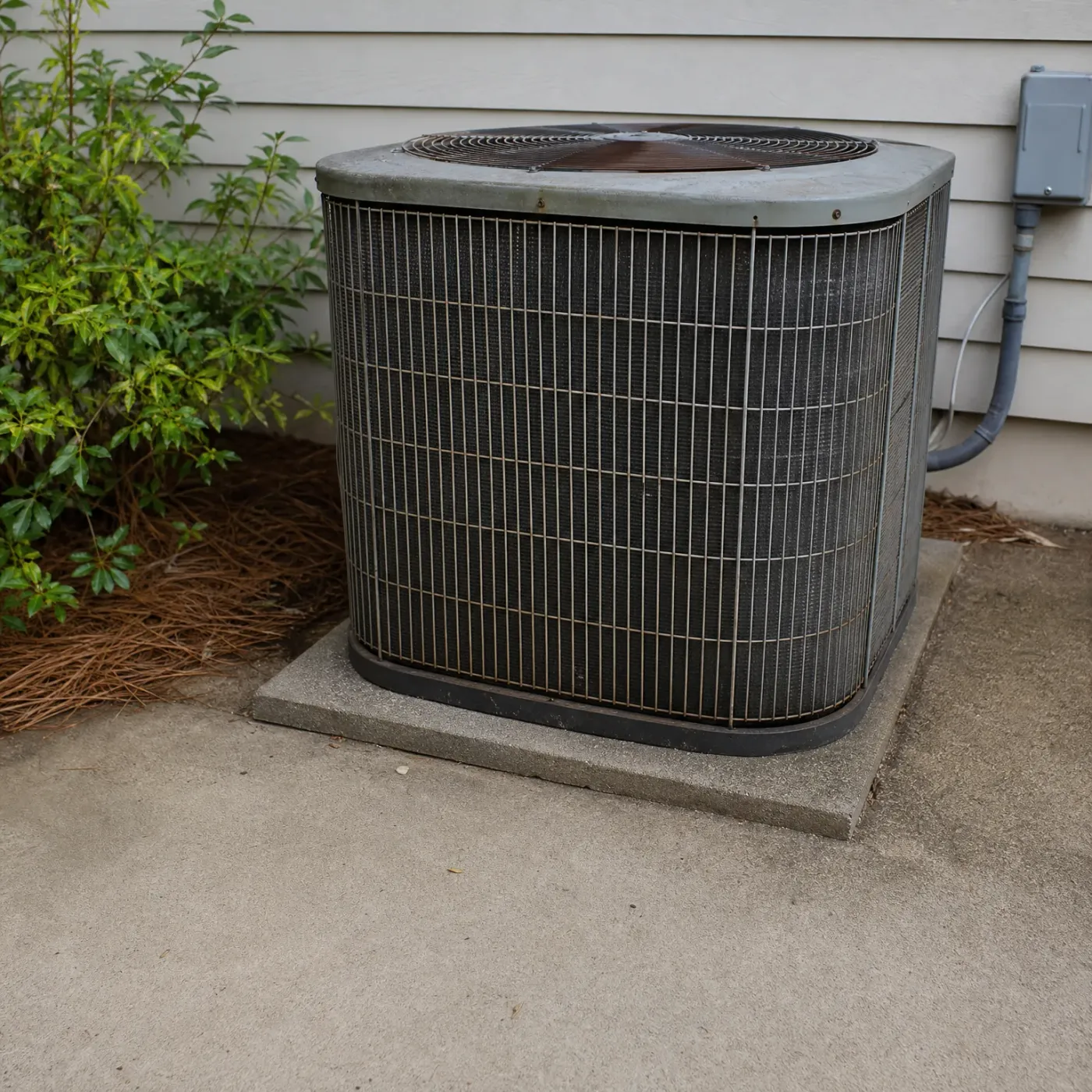
An outdoor air conditioning condenser unit on a concrete pad beside a house with horizontal lap siding, with a shrub and mulch bed to the left and conduit and a small electrical box on the wall to the right.

Fan stopped, unit under strain

Here the fan sits still while the compressor inside may still be trying to run. Dirt caked on the grilles like this often comes with age, and it won't tell you whether the problem is the capacitor, the motor or the disconnect box on the wall. That takes a look from someone licensed to open it up.

Humming Fan vs. Silent Fan

Fan hums but doesn't turn

  • A soft hum from the outdoor unit with the fan blade sitting still usually points to a failed run capacitor, not the motor itself.
  • Give the blade a push with a stick while the unit is off at the breaker; if it spins up and runs, the capacitor is the likely culprit.
  • This is still a repair call, not a reason to wait, because a dying capacitor can take the compressor down with it.
  • The unit may cycle on and off faster than normal as it tries and fails to start, which runs up the power bill without cooling anything.
  • Alabama heat does not pause while a capacitor limps along, so the indoor temperature keeps climbing the longer this goes unaddressed.

Fan silent, no sound at all

  • No hum and no motion usually means the unit isn't getting power, which could be a tripped breaker, a bad contactor, or a wiring failure.
  • Check the breaker panel first since a reset is free and takes a minute, but don't keep resetting a breaker that trips again right away.
  • A contactor can fail stuck open so the signal to start never reaches the fan motor even though the thermostat is calling for cooling.
  • If the breaker holds and there's still nothing, the problem is inside the unit and needs a contractor to trace it safely.
  • With no fan and no airflow over the coil, the system stops moving heat out of the house entirely, and indoor temperatures climb fast in Alabama's humidity.
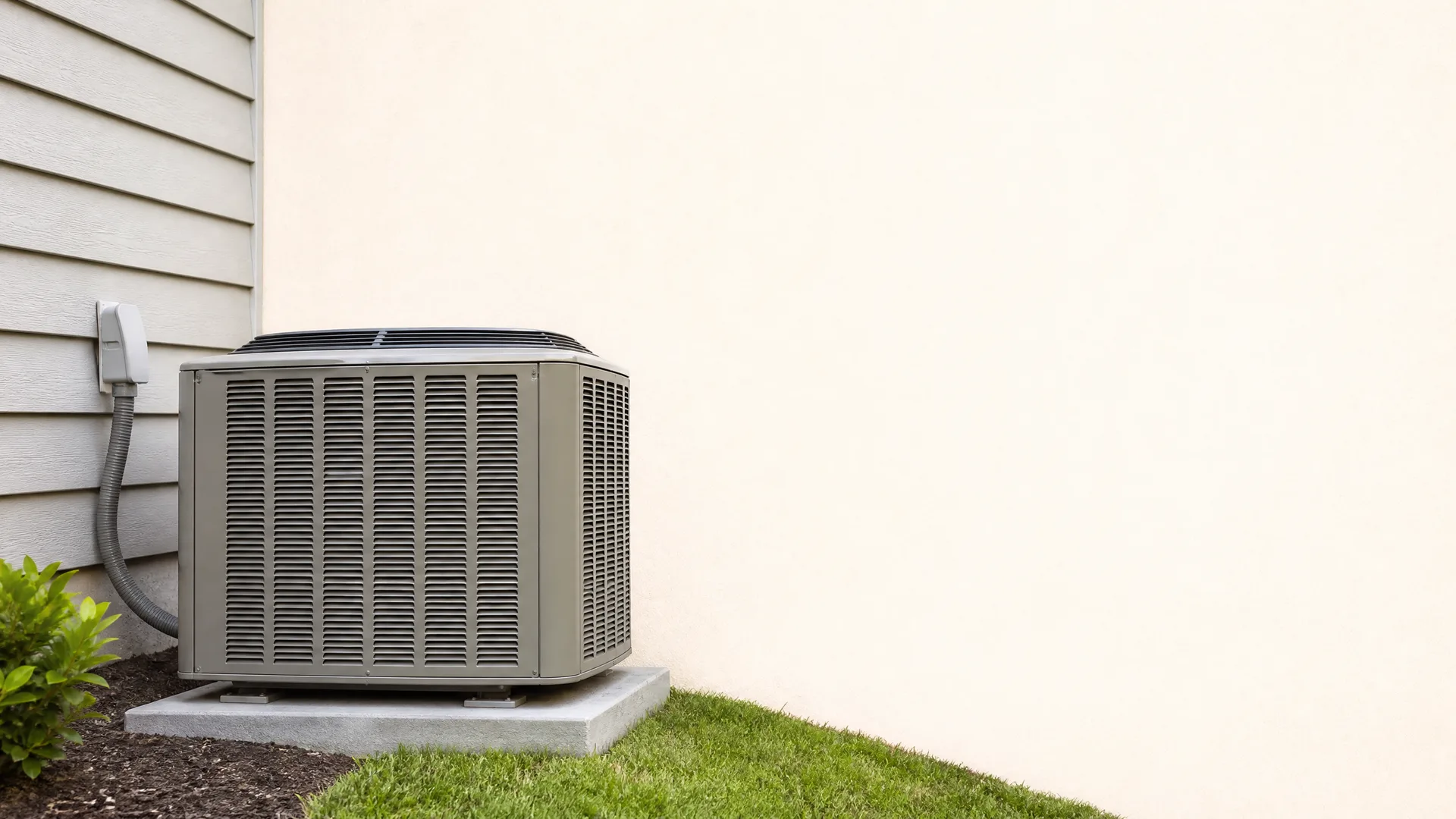
An outdoor air conditioning condenser unit on a concrete pad at the corner of a house, next to vinyl siding and a plain light-colored wall, with grass and a mulch bed in the foreground.

Why a stuck fan overheats the system

The indoor coil keeps absorbing heat from the house even when the outdoor fan is dead. With no air moving across the outdoor coil, that heat has nowhere to go, and the refrigerant lines back up with pressure. Most units have a high pressure switch that shuts the compressor down before it's damaged. That's the quiet click you might hear after a few minutes of the compressor running with a still fan, and it's the system protecting itself.

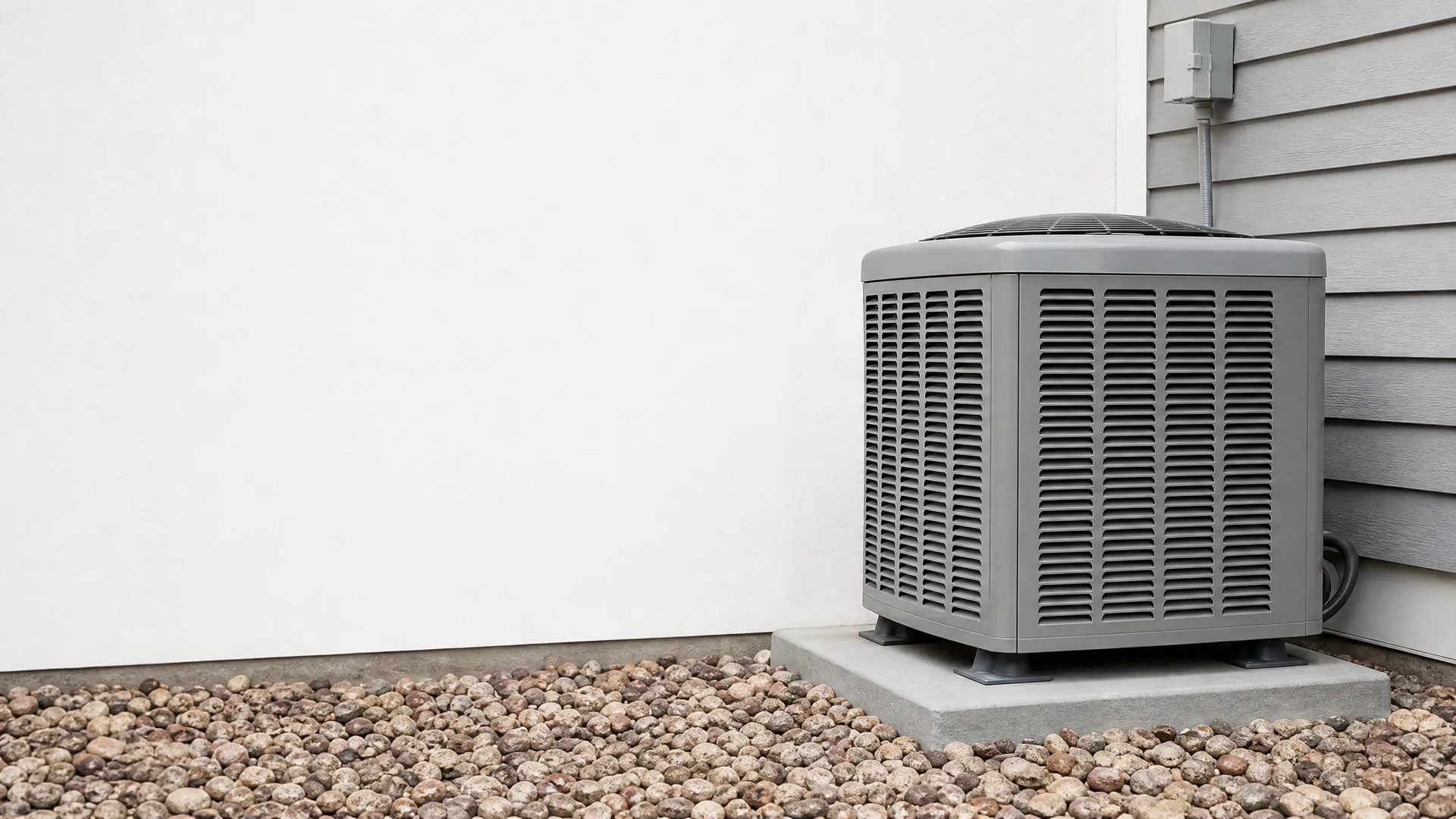
A gray outdoor air conditioning condenser unit sits on a concrete pad beside a white stucco wall and gray horizontal siding, surrounded by rounded landscaping gravel, with an electrical disconnect box mounted on the siding above.

Running it this way costs you

A compressor that keeps starting and shutting off on high pressure pulls a hard surge of current every time it tries. In Alabama, with power rates what they are and the AC running for months straight, that cycling shows up on the bill before anyone sees a repair. Letting it run this way also wears the compressor itself, which is the most expensive part in the unit. A stuck fan is a small problem that turns into a much bigger one if it sits.

A closed silver laptop and a ceramic mug of dark coffee sit on a wooden table in front of two chair backs, with a kitchen counter, tiled backsplash, wooden cutting boards, a vase of greenery and a potted plant by a window behind.

A dead fan in July doesn't stay a small problem

Right now, the compressor inside that outdoor unit is still running even though the fan isn't. It's pulling hard against pressure that has nowhere to go. Left alone through an Alabama afternoon, that's how a bad capacitor turns into a dead compressor, and a cheap part turns into the most expensive part in the whole system. Your electric bill climbs in the meantime too, since the system keeps drawing power while it works harder to do less.

You don't have time to call around and vet contractors while your house sits at 85 degrees. Send the details once, and the search is done. No listing five companies, explaining the hum and the dead fan blade to each one, waiting on callbacks, then comparing quotes against each other. Someone qualified gets your situation and gets in touch, and the house is someone else's problem to fix from there.

Interior corner with a beige sofa holding a dark green and a light cushion and a textured throw, a potted small-leaved tree beside a white-framed window, and a dark shallow bowl on a wooden coffee table in the foreground.
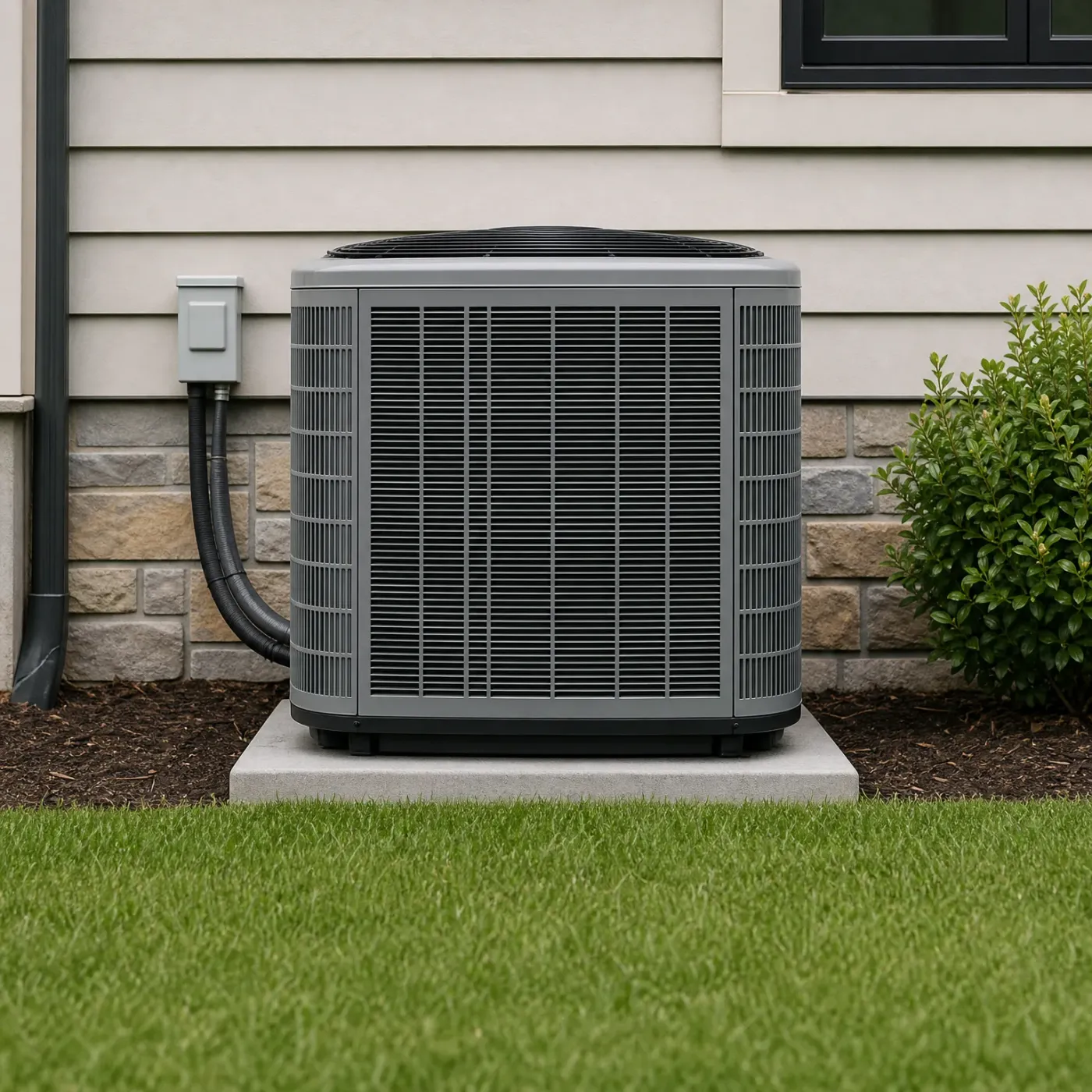
A gray outdoor air conditioning condenser unit on a concrete pad beside a house with horizontal lap siding and a stone veneer base, with a disconnect box and conduit on the wall, mulch bed and shrub to the right, and mowed grass in the foreground.

Normal operation

The fan sits behind its wire cover, spinning steady, pulling air straight up through the coil. The cabinet stays clean because that airflow keeps dust from settling and baking onto the metal. Nothing about it looks forced or strained. This is what should be running in your side yard most of a summer afternoon.

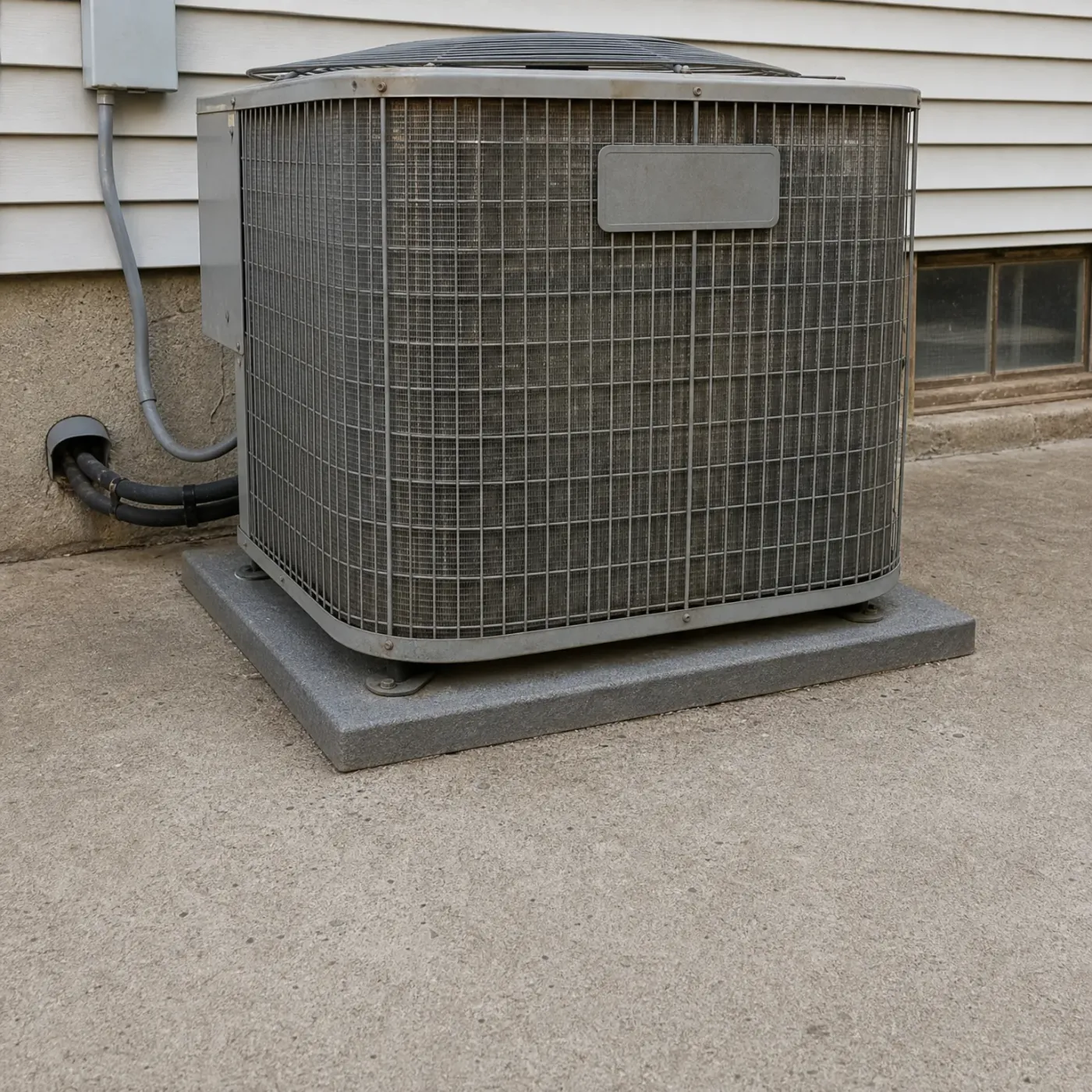
An outdoor air conditioner condenser unit on a gray composite pad beside a house with horizontal siding, a concrete foundation, a basement window, and a conduit and disconnect box on the wall.

Dirt-caked and struggling

Dust and grime have built up across the cabinet mesh, the kind that collects over seasons when nobody's looked twice at the unit. A coil caked like this can't shed heat the way it needs to, and a motor working against that load wears down faster. If the fan on a unit like this has stopped, the buildup is worth checking too.

A smiling man in a gray long-sleeved shirt stands in a kitchen looking to the side, with open shelves of dishes, a white mug on the counter, a potted plant, and a view through a doorway into a living room.
A smiling bearded man in a green sweater sits at a white marble kitchen island with a mug, potted plant and bowl of fruit, in a bright white interior with open shelving and an arched doorway.
A smiling man with dark curly hair and a beard, wearing a dark green knit sweater, stands at a white marble kitchen counter with a dark blue mug, with open shelving, pendant lights and a houseplant behind him.
A smiling man in a green ribbed sweater stands behind a wooden table holding a ceramic mug of coffee in a kitchen with white subway tile, shelves of potted plants, and a bowl of fruit.
An outdoor air conditioning condenser unit on a concrete pad beside a house with horizontal lap siding, with a gray electrical disconnect box and conduit on the wall and green shrubs and trees to the left.

One request and it's handed off

One form replaces the calls you'd make to find an air conditioner pro.

Get the air conditioner repair search off your mind today.

Send it today

Sending the form costs nothing.

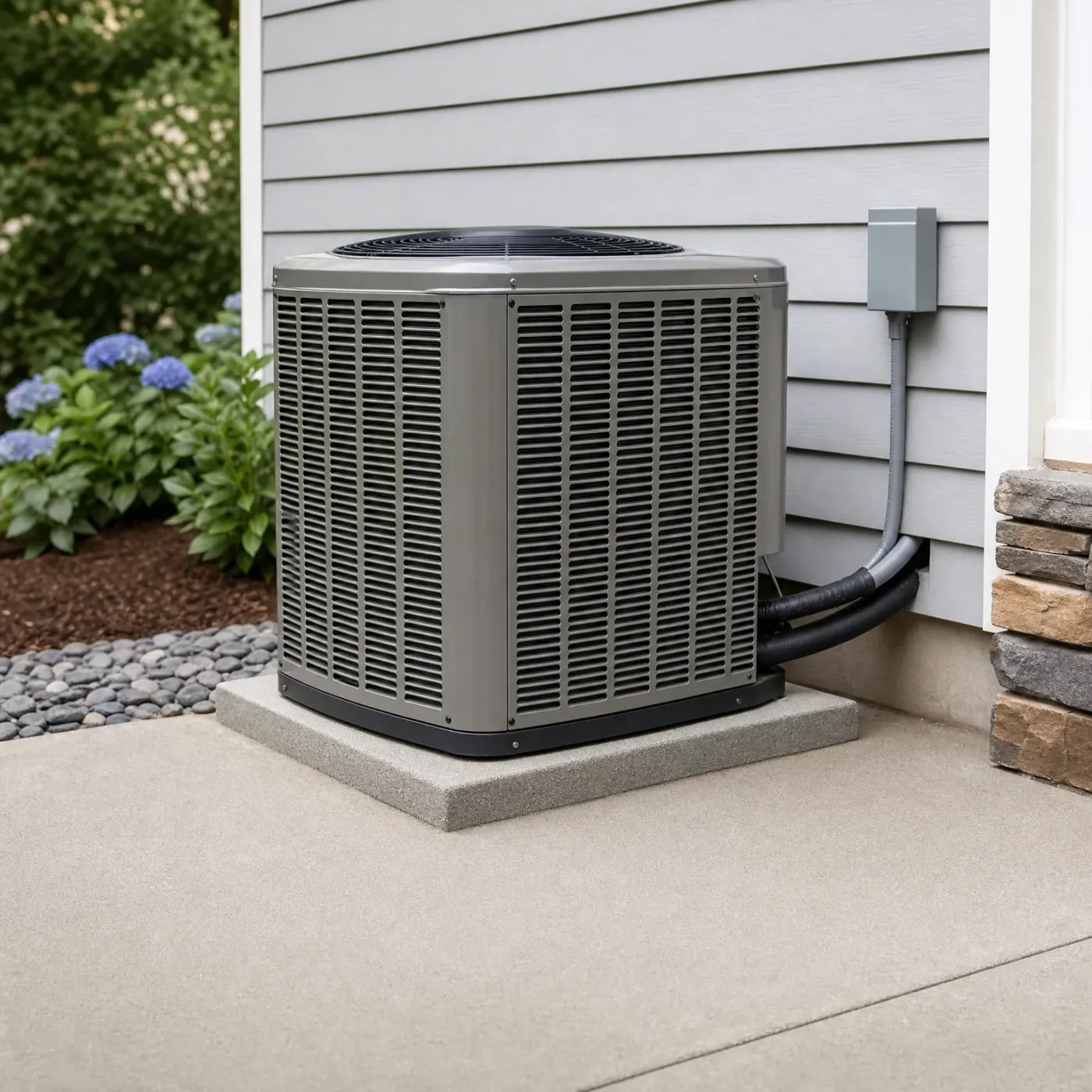
A gray outdoor air conditioning condenser unit on a concrete pad beside a house with horizontal gray siding, with a wall-mounted electrical disconnect box and insulated refrigerant lines, and blue hydrangeas in a mulched bed to the left.
A clean coil and a fan that spins free keep this unit working the way it was installed to.
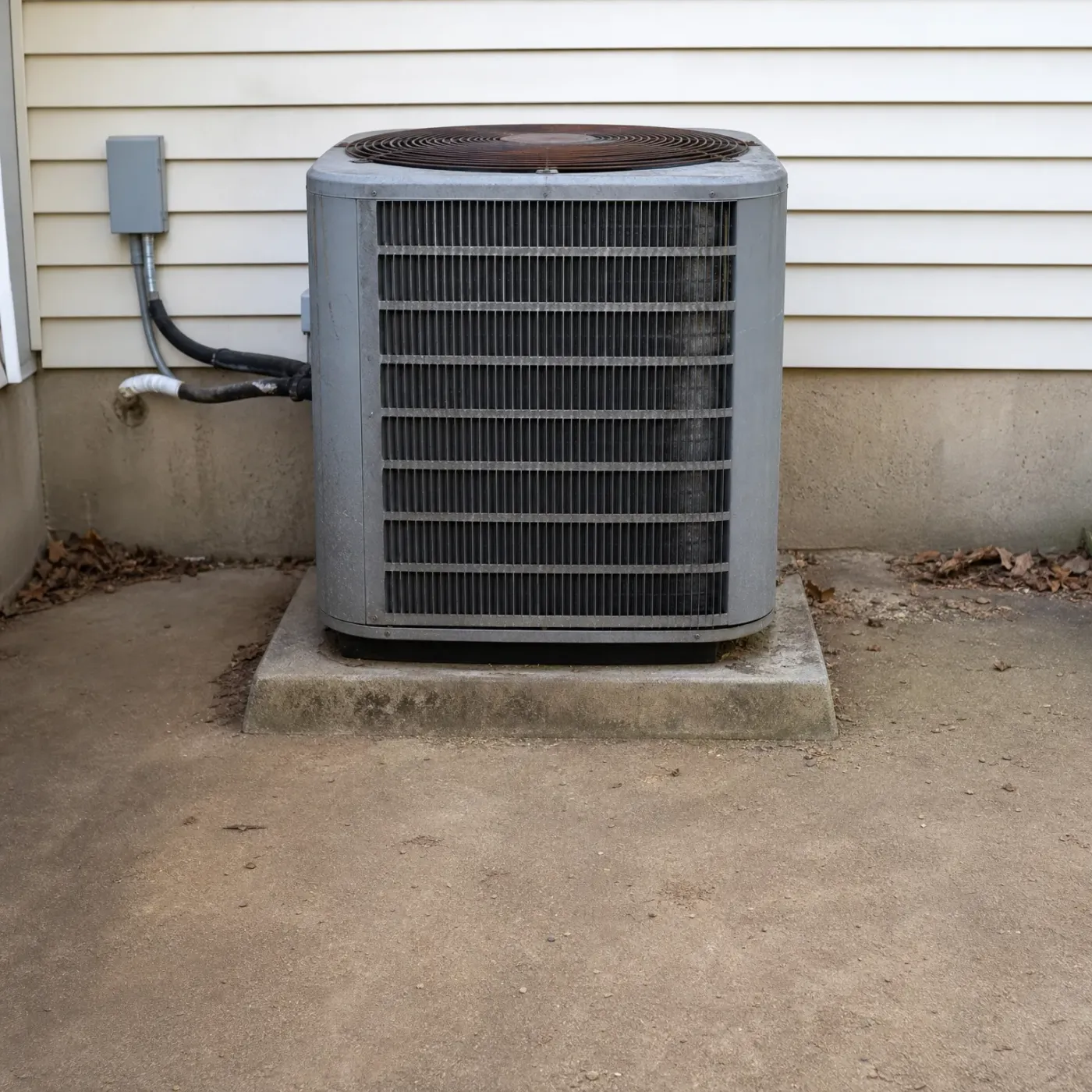
A gray outdoor air conditioner condenser unit on a concrete pad beside a house with beige horizontal siding, with an electrical disconnect box and insulated refrigerant lines on the wall and dry leaves on the ground.
Rust on the shroud and dirt packed into the fins are what a fan motor looks like after it's been straining for years.
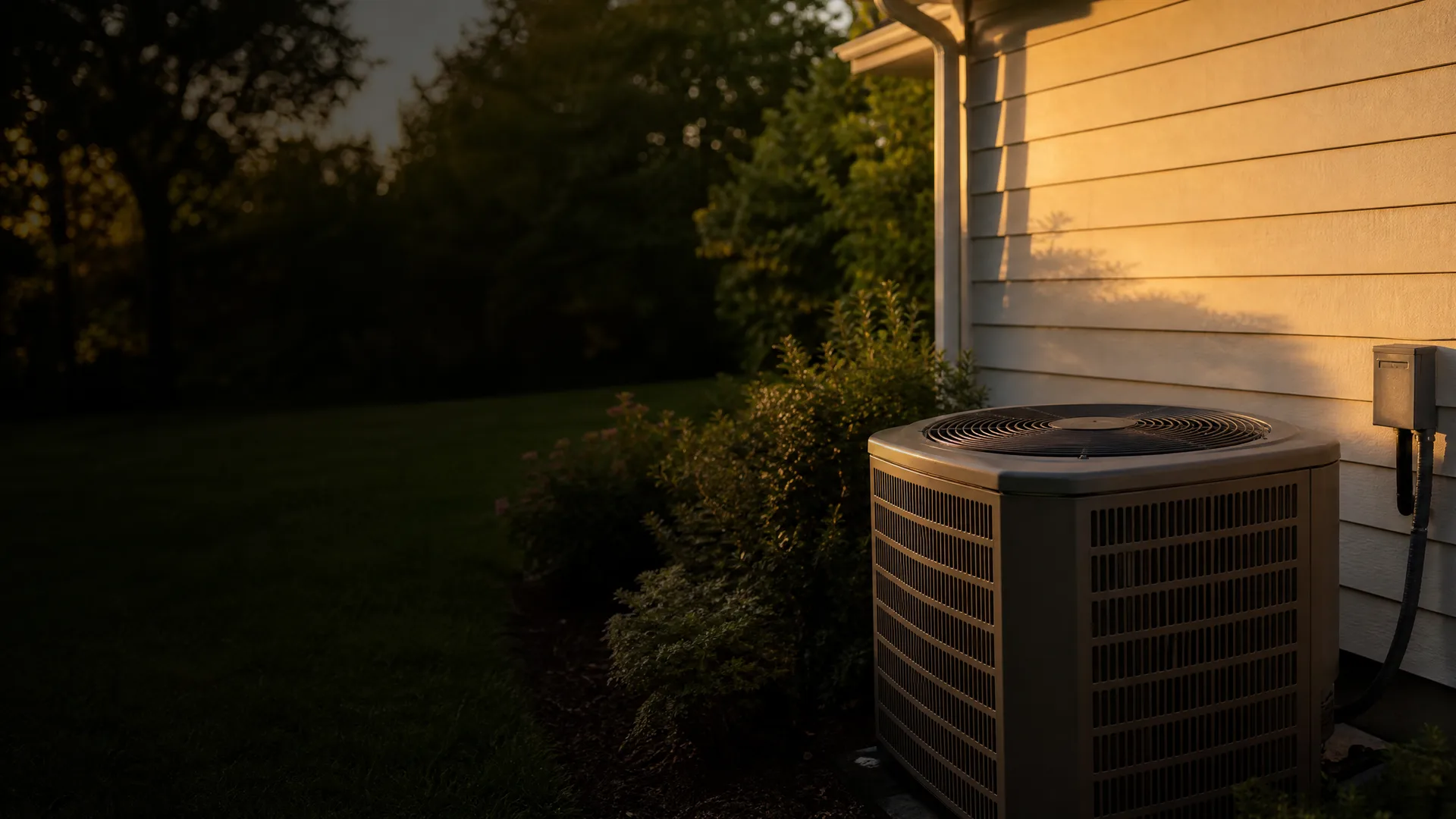
An outdoor air conditioner condenser unit beside a light-colored lap-sided house with an electrical disconnect box on the wall, surrounded by shrubs and lawn in low evening light.

You're out back around seven, the light gone thick and gold over the fence line, grill lid up, and that's when you notice the quiet. The condenser is running, you can feel the hum in the concrete pad, but the fan on top isn't turning. No breeze coming off it. You crouch down and look through the grille and the blade just sits there while the unit keeps working underneath it. Inside, the house is already a few degrees warmer than it was an hour ago, and the air coming through the vents doesn't feel as cold as it did this morning. You stand there a minute, phone in hand, watching a fan that should be spinning and isn't.
Power costs 16.09 cents per kilowatt-hour statewide

At 16.09 cents a kilowatt-hour, a compressor running flat out against a dead fan isn't just straining, it's burning through power doing it. That meter keeps turning whether the fan does or not, and a stuck fan makes the compressor work harder to move the same heat.

EIA-861 2025 statewide residential average

An outdoor air conditioner condenser unit on a concrete pad beside a house with horizontal lap siding, with a gray electrical disconnect box and conduit on the wall and a green shrub over pine-needle mulch at left.
Before you get your air conditioner repair
A gray outdoor air conditioner condenser unit on a concrete pad beside a house with light vinyl siding, with an electrical disconnect box and conduit on the wall and a leafy shrub with dark mulch to the right.
After you get your air conditioner repair

Call around yourself

You find contractors, explain the dead fan to each one, wait on callbacks, and compare quotes while the compressor keeps running against a stuck blade.

Fill out one form

Send one form

You describe the problem once. Finding someone to look at the fan stops being your job, and that search is off your plate.

Fill out one form

Why does my AC fan motor hum but not spin until I give it a push?

You've already given the blade that push and watched it take off, cooling fine the rest of the day. But you know it'll be back to humming tomorrow, and you're not about to stand out there every afternoon nudging a fan blade with a stick while the compressor runs hot against a stuck condenser. You want to know why it needs the push at all, and whether that's a sign of something about to go out for good.

A weak run capacitor, not the motor

The hum means the motor is getting power. What it's missing is the extra jolt the run capacitor sends it at startup to get the blade turning against its own resistance. A capacitor that's lost most of its charge can't deliver that jolt anymore, so the motor just sits there humming until something else, your push, a gust of wind, gets the blade moving. Once it's spinning, the motor can keep it going on its own. That push working is actually useful information: it tells you the motor itself still turns fine, and the part that's failing is the capacitor. Capacitors don't recover. One that's weak now will keep getting weaker until the motor won't start at all, pushed or not.

A single-story brick ranch house with a gray shingled hip roof, white-framed windows and basement windows, fronted by a wide asphalt driveway with sun glare, surrounded by green lawn and leafy trees under a bright hazy sky.

Summer air in Alabama holds a dew point around 69°F, averaged across June, July and August, according to NOAA climate data. That's heavy, damp air for the outdoor coil to work against even when the fan is spinning right. With the fan stuck, none of that muggy air is moving across the coil at all, and the system has no way to dump heat outside. You'd notice the indoor air not cooling the way it should, and the outdoor unit running warm to the touch while it struggles to keep up against air that's already working against it.

NASA POWER T2MDEW county cells weighted by homes

A man in a blue T-shirt sits on a light gray sofa, laughing while looking at an open laptop in the foreground, with a framed picture, lamp and potted plant behind him.
A bearded man in a blue and brown plaid flannel shirt stands indoors looking out a window at snow-covered trees, with a ceramic mug on the windowsill.

Where this leaves you

  • A fan that hums but won't spin usually means the capacitor; a fan that's silent points to the motor, a breaker, or the contactor.
  • Either way, the compressor keeps running against a coil that can't shed heat, and that strain doesn't fix itself.
  • Alabama summers push these parts harder than most places, and a stuck fan now tends to mean a bigger repair later.
  • Checking the breaker and giving the blade a push tells you which problem you're dealing with, not how to fix it.
  • Sending one form replaces calling around, repeating the same explanation to each contractor, and sorting through quotes yourself.
  • Once that form is in, finding someone to look at the fan is no longer something you have to manage.

A fan that won't spin comes down to one of a few parts: the capacitor, the motor, a tripped breaker, or a bad contactor. A hum tells you it's probably the capacitor. Silence points to the motor or the power feeding the unit. Either way, the compressor doesn't know the fan has stopped. It keeps running, pulling heat into a coil that has no way to get rid of it, and that strain builds the longer the unit sits like this. In Alabama, where the outdoor unit works through months of heavy, humid air, that strain adds up faster than it would somewhere milder, and a stuck fan today has a way of turning into a failed compressor later in the summer. Checking the breaker and giving the blade a push by hand, with the unit off, will tell you which kind of problem you've got. It won't fix anything. That part still needs someone who can test the capacitor, check the motor windings, or trace the power to the contactor. What changes once you send the form is what's left for you to do. You're not calling three or four companies, explaining the hum or the dead fan to each one, waiting on callbacks, then sitting with quotes trying to compare them against each other. You describe it once. From there, finding someone to get out and look at that fan is off your plate.

A house roofline with a stone chimney rises above trees, with a tall pine, Spanish-moss-draped oak branches, and misty hills in the background.

It's off your list after this

Skip the search

It costs nothing to send, and you don't have to hire anyone.

A stuck fan doesn't fix itself by morning, and every hour it runs that way is an hour the compressor spends working against pressure it can't release. Send the form and stop checking that blade yourself every time you walk past the unit.