Why your AC smells like burning in Alabama

Step 1 of 3: Equipment

Why does my AC smell like it's burning?

A burning smell from the AC is one of those things you notice right away, usually when the system kicks on after sitting off for a while. In Alabama, your AC runs hard for months at a time, so a smell like this is worth taking seriously rather than waiting to see if it goes away on its own.

Most often it's a motor working too hard or dust burning off a part that just started up

A burning smell usually means something electrical is overheating, like a blower motor or capacitor under strain, or it's dust burning off a heating element or coil that hasn't run in a while. Either way, it's a sign something inside the unit is working harder than it should. With how many hours your AC puts in during an Alabama summer, parts wear faster here than in places with shorter, milder summers, and a motor already struggling has less room to run before something gives out. If the smell sticks around after a few minutes of runtime, or comes back every time the system cycles on, that points to a part failing rather than dust clearing off.

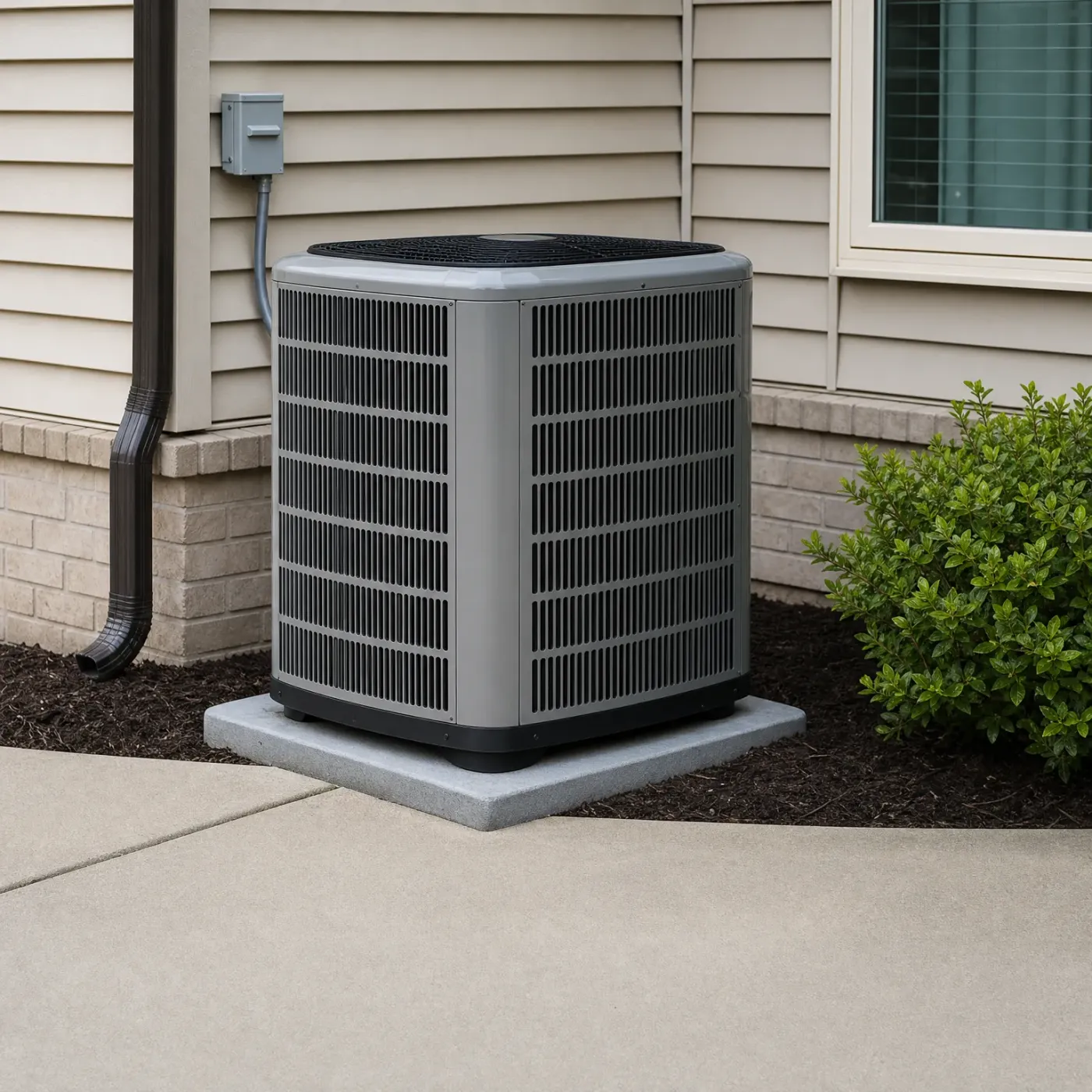
A gray outdoor air conditioning condenser unit on a concrete pad beside a house with horizontal vinyl siding, a brick foundation, downspout, electrical disconnect box, mulch bed and a green shrub.
A clean condenser outside pulls air through fins and a mesh grille that are free of dirt and mulch buildup.
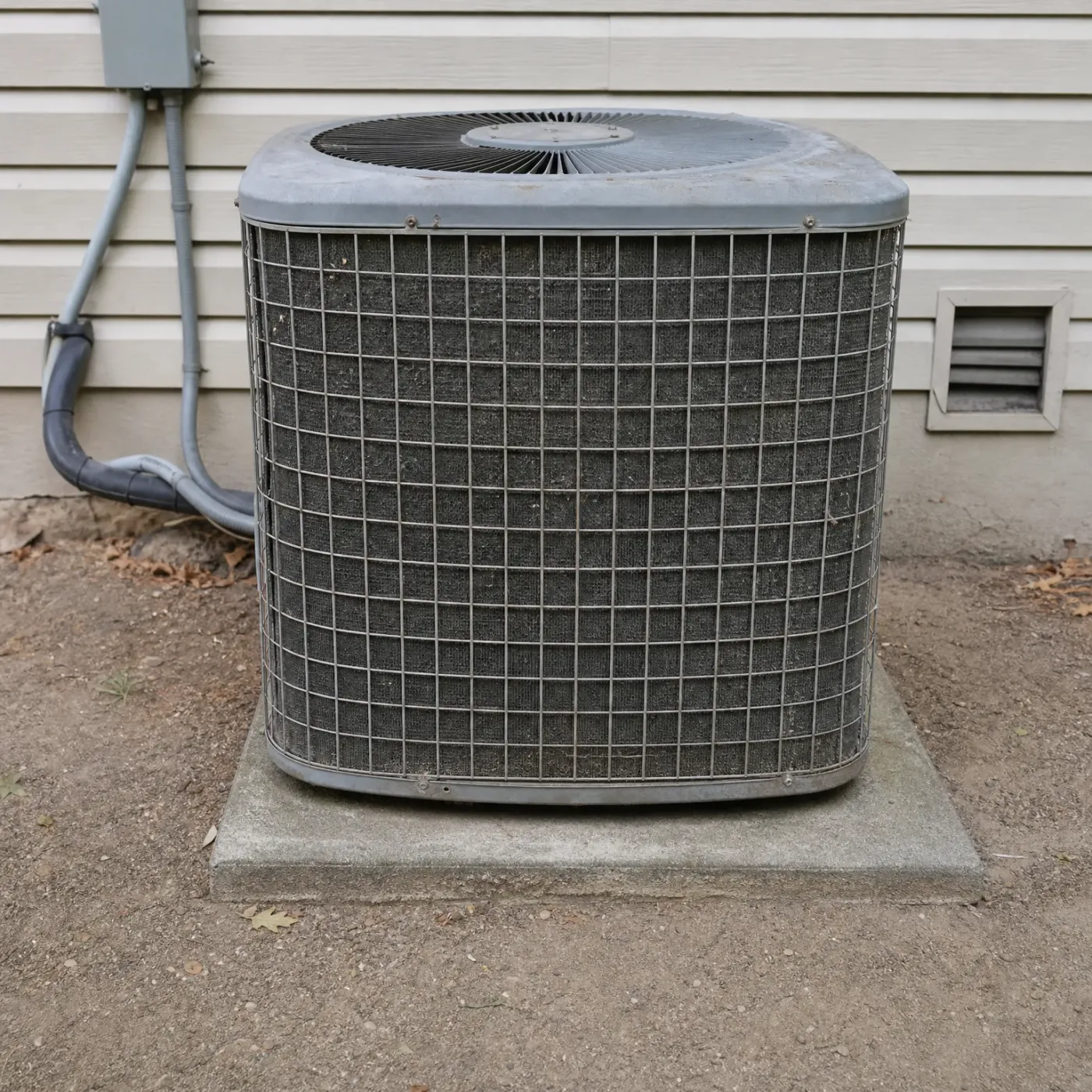
An outdoor air conditioning condenser unit with a dirty mesh coil guard sits on a concrete pad beside a house with horizontal lap siding, a wall vent, and conduit running to an electrical disconnect box.
A unit this caked in grime chokes the airflow the motor and wiring need to stay cool, which is often where that smell starts.

Most of these smells trace back to something electrical, not something on fire. Dust settles on motor windings over months of hard running, and once it heats up it gives off that hot, dusty smell before anything is actually damaged. A looser wire connection is a different problem. It arcs a little every time it makes contact, and that's what produces the sharper, plastic-like smell. The run capacitor can do something similar as it wears out, putting off a hot electrical smell right before it leaves the compressor unable to start. Outside, a wire that's frayed or chewed can short against the metal cabinet, and that smell tends to come and go with the fan rather than stay constant. If your system also heats, and the smell only shows up when it switches to heat strips, that's usually just dust burning off strips that haven't run in a while. A blower motor bearing wearing out is the one that gets worse with time, since the heat it throws off can start to scorch the wire coating or insulation around it.

What's Actually Burning In There

  • A burning smell from the blower compartment often means dust has built up on the motor windings and is heating up as the motor runs.
  • A sharp, acrid smell closer to burning plastic usually points to a wire connection that has loosened and is arcing inside the air handler.
  • The run capacitor can overheat and give off a hot, electrical smell when it's starting to fail, before it stops the compressor from starting at all.
  • A frayed or chewed wire inside the outdoor unit can short against the cabinet and produce a burning odor that comes and goes with the fan.
  • If the smell shows up only when the heat strips kick on, dust sitting on those strips is burning off as they warm, which is common after the system sits unused.
  • A failing blower motor bearing can get hot enough to scorch nearby insulation or wire coating, and the smell usually gets stronger the longer the system runs.
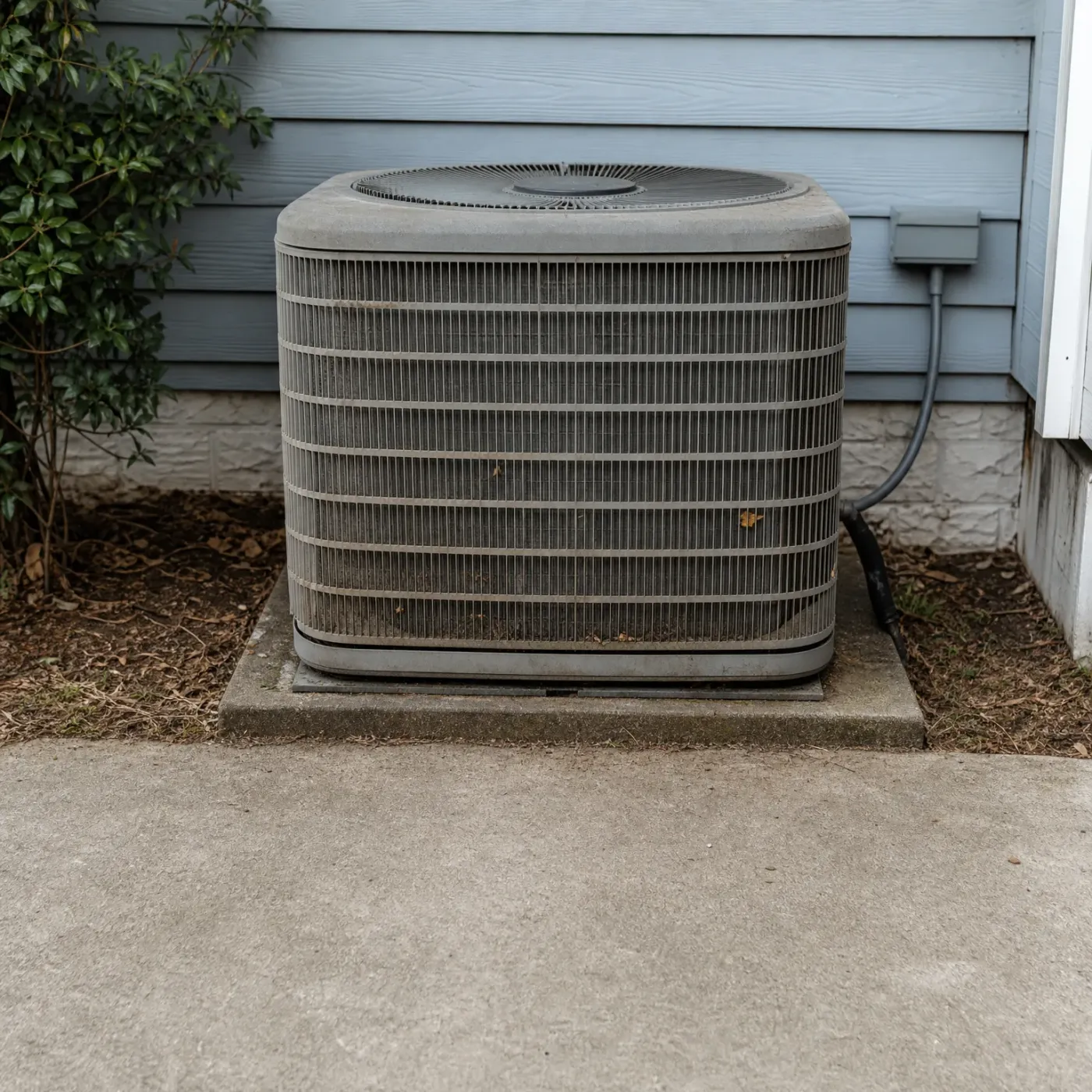
An outdoor air conditioning condenser unit on a concrete pad beside a house with light blue horizontal siding, with a shrub to the left and a conduit and disconnect box on the wall to the right.
Before you get your air conditioner repair
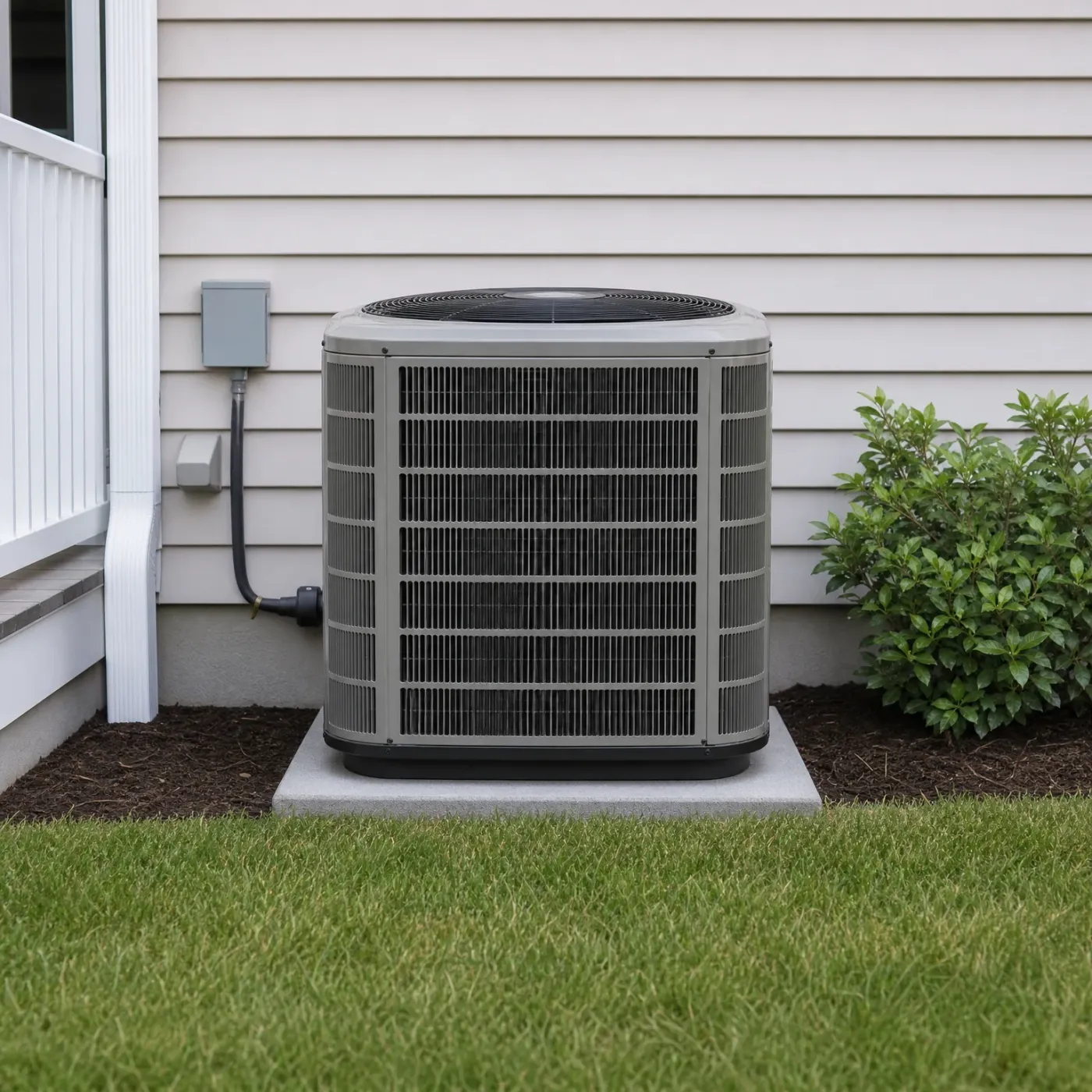
An outdoor air conditioning condenser unit on a concrete pad beside a house with horizontal lap siding, with a gray electrical disconnect box and conduit on the wall, mulch bed and shrub to the right, and mown grass in the foreground.
After you get your air conditioner repair

Hand off the search today

The pro who reaches out is licensed in Alabama.

It costs nothing to send, and you don't have to hire anyone.

Why the smell comes and goes

A burning smell that shows up only when the AC first kicks on and then fades is often the motor or blower heating up before the system settles into a steady run. That pattern doesn't make it safe to ignore. A loose wire or a motor working through built-up dust will keep heating the same way every time the system cycles, and running the AC hard all summer in Alabama means that cycle happens dozens of times a day. The smell fading is the equipment reaching a steady state, not the problem going away.

Why shutting it off matters

If the smell is sharp, like burning plastic, turning the system off at the thermostat and the breaker is worth doing before anyone looks at it. Arcing at a wire connection can scorch the insulation around it, and a wire with damaged insulation can keep arcing even after the smell fades. A licensed contractor can check the connection, the motor windings and the wiring inside the unit, and tell you which one is actually heating up. That's not something to find out by waiting to see if the smell comes back.

A gray-haired man in a dark long-sleeve shirt sits on a gray sofa in a living room, looking toward a sunlit window with sheer curtains.
A gray-haired man in a dark green sweatshirt sits on a sofa in a living room, looking toward a bright window, with a houseplant, lamp, fireplace and framed art behind him.
A gray-haired bearded man in a dark green collared sweater sits on a sofa in a living room with a window, houseplant, floor lamp and bookshelves, looking off to the side.
A gray-haired man in a dark green sweater sits on a sofa in a sunlit living room, looking off to the side, with a framed landscape painting, dining table and shelving behind him.

In your house, that smell usually shows up at the supply vents first, in whatever room you're sitting in when the AC kicks on. You might catch it near the return grille too, since that's pulling air straight off the blower and motor. If it's electrical, a few minutes of that smell is a few minutes too many. A motor running hot enough to smell can fail outright, and in Alabama that means no AC while you wait on a repair, in a house that heats up fast once the system stops. Letting it go also risks the wiring around it, which turns a blower motor repair into something bigger. If you've got an electric furnace sharing that same air handler, a damaged connection there can affect it too. With power costs what they are here, a motor straining before it fails is already pulling more than it should. Worth checking your breaker panel as well. If that circuit has tripped on its own, the system is already telling you something is wrong.

Power costs 16.09 cents per kilowatt-hour statewide

At 16.09 cents a kilowatt-hour, an AC that's already straining to push air past a dirty coil or a failing motor costs more every hour it runs that way. A burning smell is usually a sign something is working harder than it should, and that shows up on your bill before it shows up as a breakdown.

EIA-861 2025 statewide residential average

What to Do About That Smell

  • A burning smell almost always traces back to a motor, a wire, or dust and debris heating up somewhere in the system.
  • Letting it run while that smell shows up risks turning a loose wire or a dirty motor into a bigger repair.
  • A licensed local contractor who works on Alabama AC systems all summer has seen this exact smell and knows where to check first.
  • Matching you with one contractor instead of several means one visit, one diagnosis, and no juggling calls.
  • Once you send the request, finding the right person for the job is off your plate.
  • The smell is a signal worth acting on, not living with through another hot month.

A burning smell from your AC comes down to a short list of causes: dust cooking off a motor, a wire arcing where a connection has worked loose, or a belt or bearing running dry. None of those get better on their own. Alabama summers ask a lot of your system, and a unit already working that hard doesn't have room to keep running with a loose wire or a choking motor. The longer it runs that way, the more likely a cheap fix turns into a motor replacement or a control board burned out by a short.

This is exactly the kind of problem a local contractor sees over and over once the heat sets in. Someone who works on AC systems across Alabama all summer has opened up this same compartment, smelled this same smell, and knows whether to check the blower motor first or trace the wiring. That kind of familiarity is what makes the diagnosis fast instead of a guessing game.

When you send the request, you're matched with one contractor, not a handful of companies competing for the job. That means one visit, one person looking at your system, and no sorting through calls from strangers to figure out who to trust. From there, finding the right person for the job is no longer something you have to manage.

The smell itself is the signal. It's telling you something in the system needs attention now, not after another month of hot weather runs it harder.

Kitchen corner with cream upper cabinets, oak lower cabinets, white marble-look countertop, beige tile backsplash, a ceramic vase of greenery, a wooden cutting board and bowl, and a black-framed window at right.
Interior corner of a room with a white-framed window and wide sill, beige walls with panel molding, a wooden cabinet holding a ceramic vase with a green leafy plant, and blurred shrubs and trees outside.
A wood-framed armchair with beige cushions and a woven lumbar pillow sits in a corner beside a large window overlooking green trees, with a tall ceramic vase holding leafy branches on the left and plaster walls and wood flooring.
Interior corner with a white-framed window above a sill, beige walls with baseboard molding, a greige shaker-style cabinet with brass knobs and a potted plant on top, light wood flooring and a woven jute rug.
A dark-framed six-pane window with white trim and sill set in gray horizontal lap siding, with hydrangea shrubs below and a white column and shingled roof section at left.

Stop chasing an air conditioner pro

Only one pro gets your request, so you hear from one company.

Hand off the search

No charge to send it. You decide if you hire them.