Tell a local repair pro what your air conditioner is doing.
A buzzing sound from your outdoor unit usually means something electrical. It could be a contactor with pitted contacts, a capacitor on its way out, or loose wiring in the disconnect box. Sometimes it's just a fan blade that's hit something and is rubbing on the housing. None of these fix themselves, and running the unit while it buzzes can turn a loose wire into a tripped breaker, or a weak capacitor into a compressor that won't start at all.
That matters more here than in most places. Alabama summers stay hot and humid for months, and your AC runs hard the whole time. Most homes in the state heat and cool with electricity, and power isn't cheap, so a system working harder than it should shows up fast on the bill. A buzzing unit limping along through July and August is not a small thing to ignore.
Getting this looked at means having someone open the disconnect, check the capacitor's reading, and look at the contacts before anything gets worse. That's not something to hand to just anyone. You want a licensed contractor who works in Alabama and knows what tends to fail on these units once the heat sets in year after year, someone who's pulled a bad contactor out of a unit like yours more than once and knows what to check first.
When you request service through this page, you're matched with one contractor local to your area, not a handful of companies competing for your call. That contractor will reach out to you directly about your unit and what you're hearing. No guesswork about who's calling or why, just someone who services AC systems in your area and is ready to take a look at what's making that noise.
Tell them what you're hearing and where the sound is coming from. The button below gets that started.
A buzzing sound from your outdoor unit almost always points to an electrical part rather than the whole system failing. The contactor is a common cause. It's the switch that sends power to the compressor and fan, and its contacts pit and burn with age until they hum instead of closing clean. A failing capacitor buzzes too, since it struggles to give the compressor the jolt it needs to start. Loose wiring inside the disconnect box can do the same thing. Running your AC with a bad contactor or capacitor lets the compressor pull more current than it should, and in Alabama, where that compressor runs hard all summer, a part limping along now tends to fail outright on the next hot afternoon. Catching the buzz early is usually the difference between a simple part swap and a compressor that has to be replaced.
Is that buzzing getting worse out there?
Go stand near the outdoor unit and listen. A steady hum that's always been there is different from a buzz that's new or getting louder. You might hear it click on and off rapidly, or notice the fan on top spinning slower than it should, or not at all while the unit still hums. Some people smell a faint burning odor near the disconnect box, which means wiring or a contact has overheated. If the buzzing keeps up and nobody looks at it, a pitted contactor can weld itself shut and leave the outdoor unit running nonstop, or it can fail open and leave the house without cooling on a muggy Alabama afternoon when you need it most.
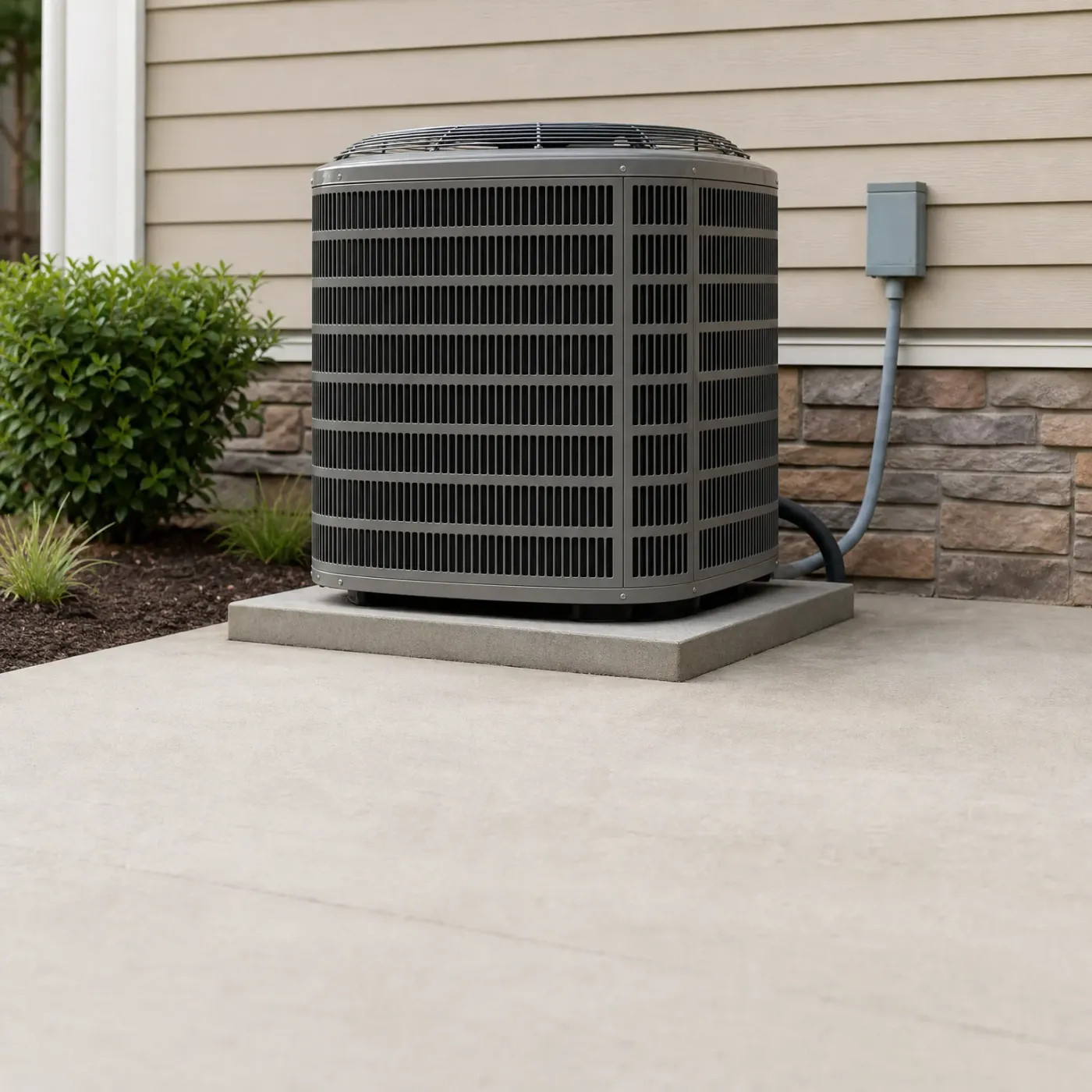
A clean coil runs quiet
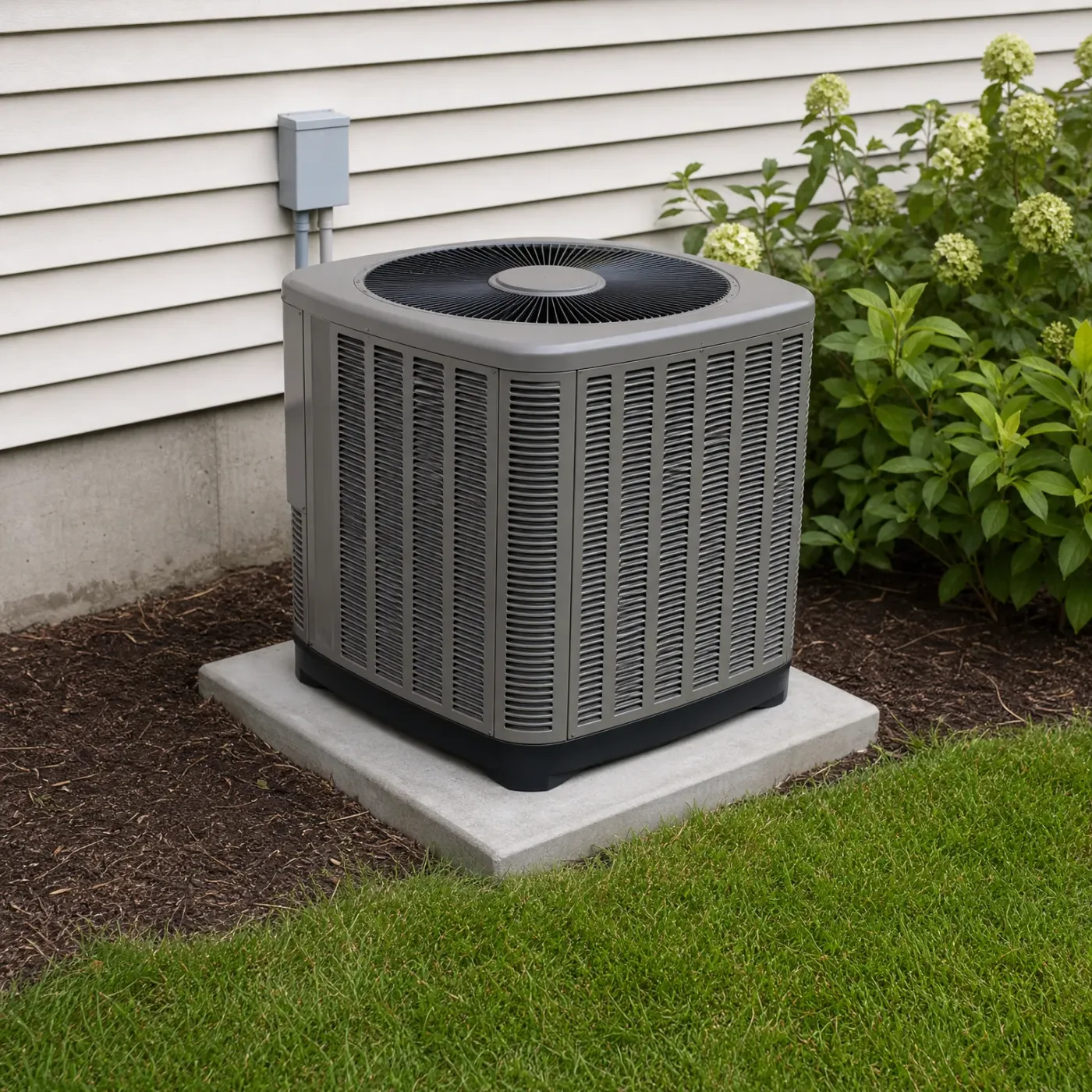
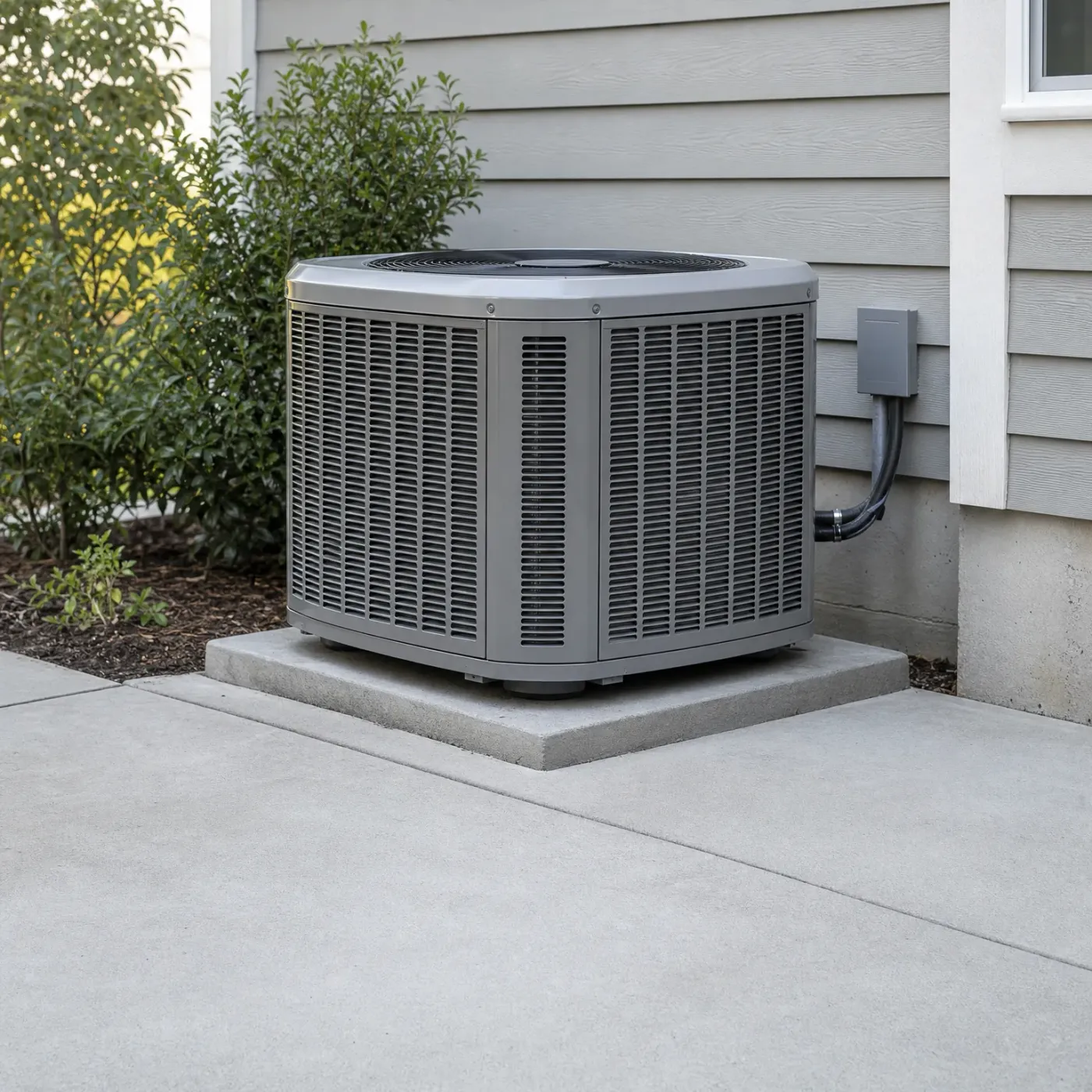
This unit sits clear of mulch and leaves, with the coil fins open to the air. Nothing is rubbing, nothing is arcing, and the hum you hear is just the compressor doing its job. This is what quiet trouble-free running looks like.
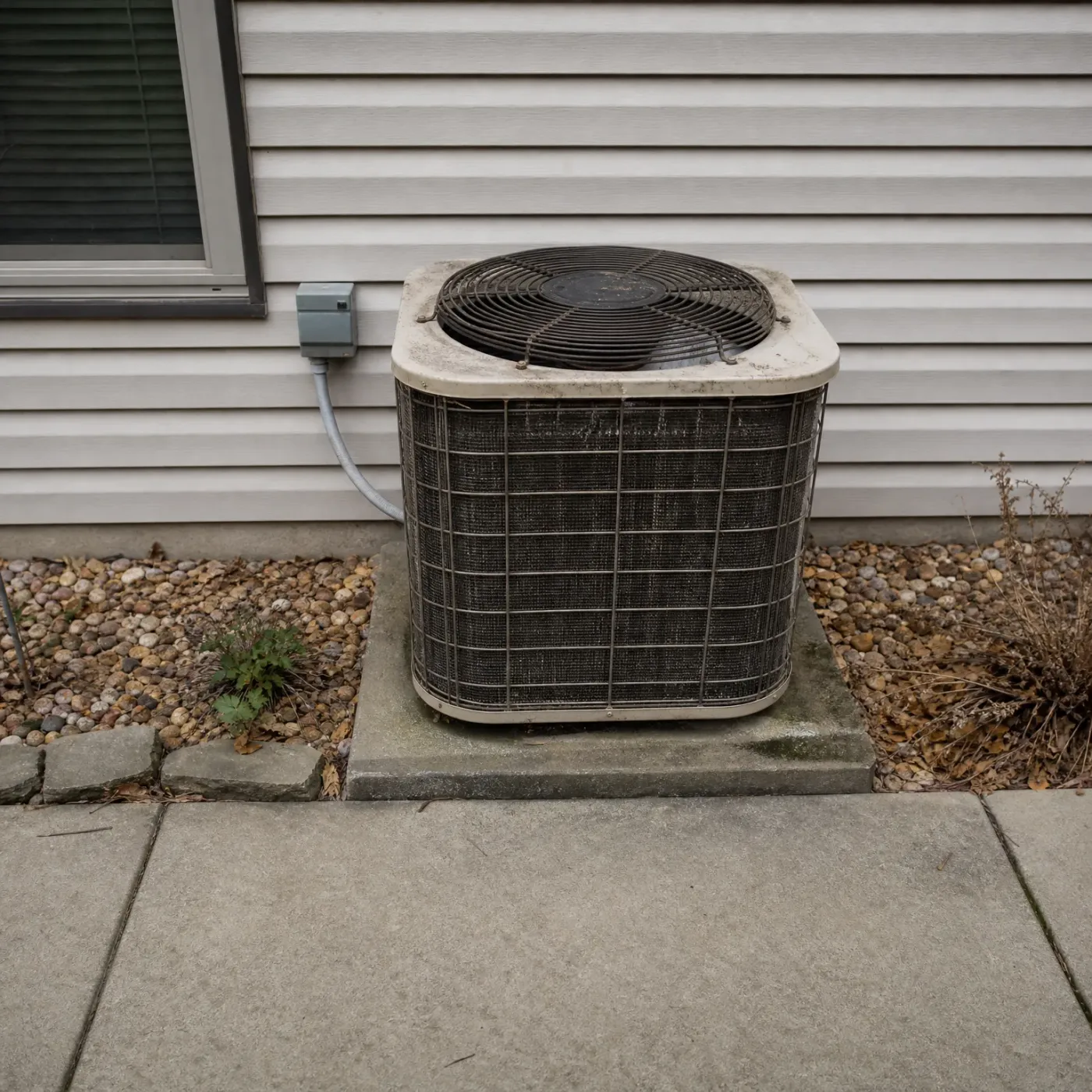
Dirt and grime load the system
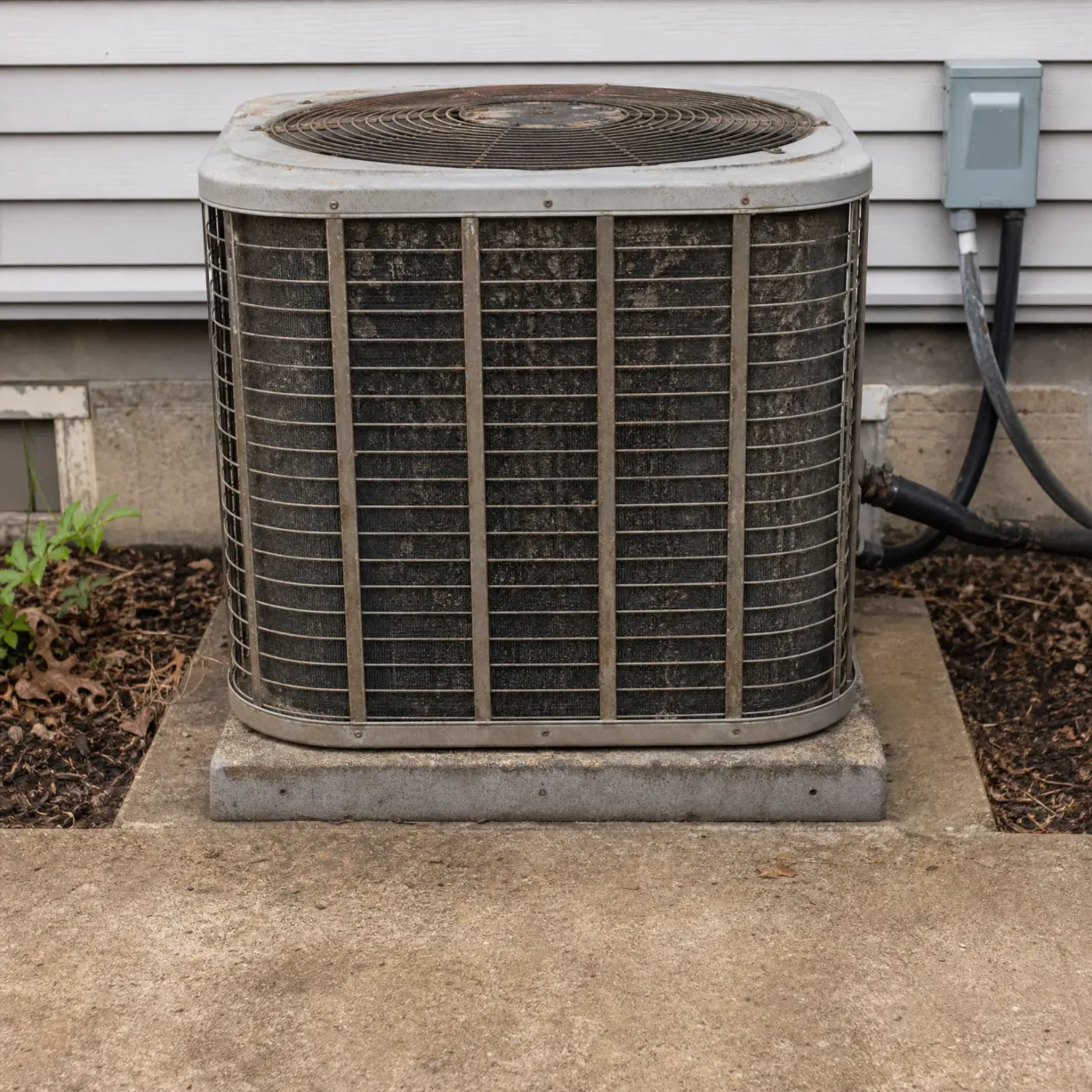
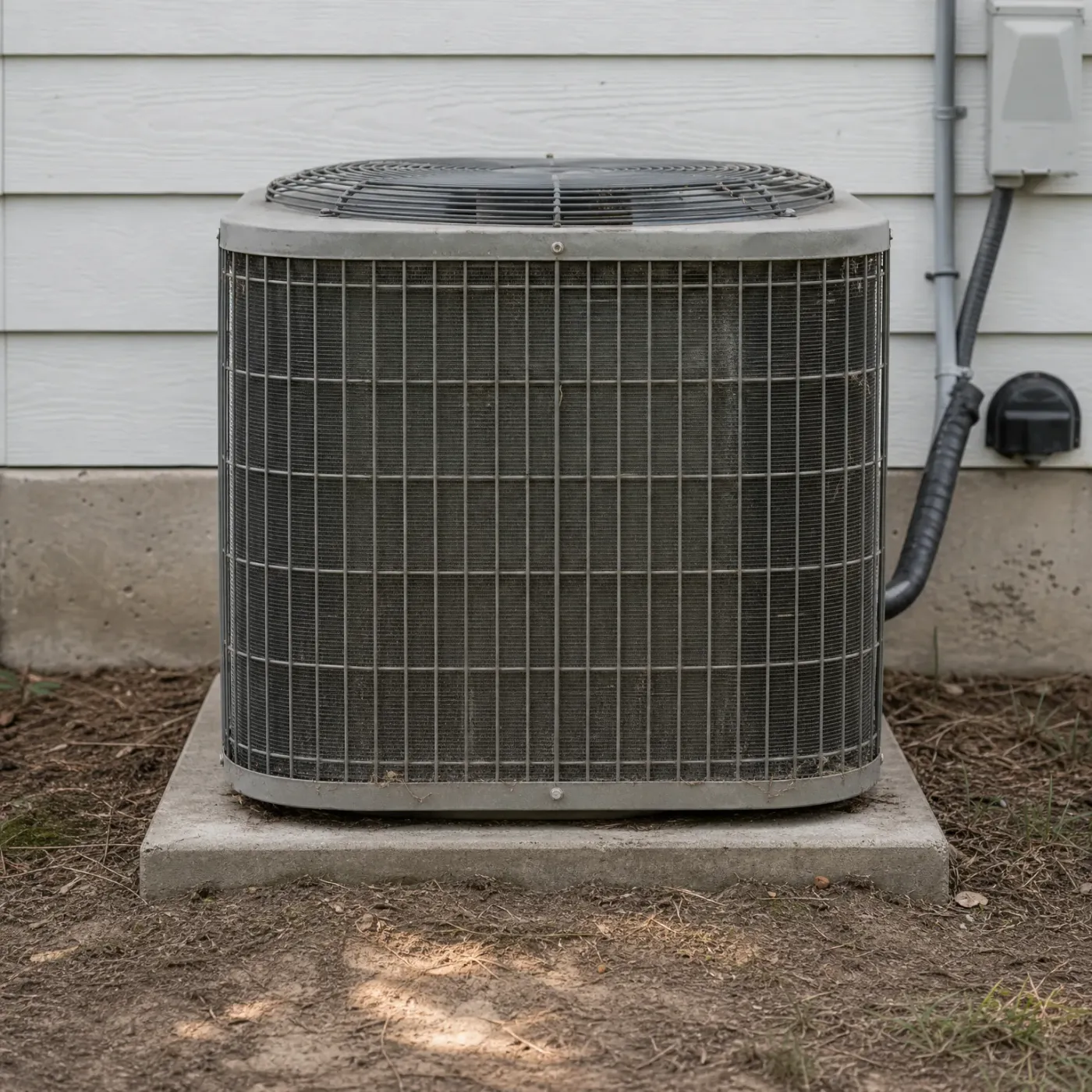
Caked-on grime like this blocks airflow through the coil, so the compressor works harder and runs hotter than it should. That extra strain is exactly what pits a contactor's contacts or wears down a capacitor, and a buzz often follows.
Your request goes to one pro, not a list of companies.
It costs nothing to send, and you don't have to hire anyone.
What's Actually Making That Noise
The contactor is a small switch about an inch square, and a buzzing one often has a pit or burn mark you can see on the contact face.
A capacitor stores a charge to start the compressor and fan motors, and as it weakens it lets the motor hunt and buzz instead of starting clean.
Loose lugs in the disconnect box let current arc across a small gap, and that arc is what you're hearing as a buzz, not a hum.
A fan blade that's bent or knocked off balance will tick or buzz once a second as it brushes the fan guard or the unit's housing.
The compressor itself can hum low at startup for a second, but a buzz that continues after that points to the contactor or capacitor feeding it.
Humidity in Alabama summers pushes the compressor to run longer each cycle, and that extra run time is what wears a marginal part down to failure.
Most of what you hear coming from the outdoor unit traces back to one of a handful of parts, and knowing which one helps you describe the problem clearly if you call someone. The contactor is the first place to look. It's a small switch, about an inch square, that closes to send power to the compressor and fan every time the thermostat calls for cooling. Over thousands of cycles the contact face pits and burns, and a pitted contactor buzzes instead of closing clean. Next to it sits the capacitor, which stores the charge both motors need to start. A weak capacitor can't deliver that charge all at once, so the motor hunts for a second before it catches, and that hunting sounds like a buzz. Loose wiring is another common cause. If a lug in the disconnect box has worked loose, current can arc across the small gap it leaves, and that arcing is a buzz, not the steady hum of a unit running normally. Mechanically, a fan blade that's bent or thrown off balance will tick or buzz once per rotation as it brushes the guard or housing, which is a different rhythm than an electrical buzz. Alabama summers add another layer. Long, humid stretches mean the compressor runs longer on each cycle, and that extra run time is what pushes a marginal part the rest of the way to failing.
Coil clean, fins open, pad clear: nothing to rub or arc, just the compressor running the way it should.
Dirt packed on the coil guard makes the unit work harder, and that strain shows up as a buzz that wasn't there before.
Power costs 16.09 cents per kilowatt-hour statewide
At 16.09 cents per kilowatt-hour, a compressor straining against a bad contactor or a weak capacitor pulls harder than it should every time it cycles on. Left alone, that buzz shows up on your bill before the unit quits outright.
EIA-861 2025 statewide residential average
What a buzz left running leads to
A contactor with pitted contacts doesn't fix itself. The pitting gets worse each time the switch closes, and eventually it can stick shut or fail to make contact at all. A weak capacitor follows the same path, giving the compressor less of the jolt it needs to start until one day it doesn't start. What begins as a buzz you can live with turns into a unit that won't come on some afternoon in August, usually when you need it most.
Why it's worth a look now
Catching a pitted contactor or a weak capacitor early usually means replacing one small part. Wait long enough and the strain can reach the compressor itself, which costs a lot more to deal with and sometimes means the whole outdoor unit. A licensed contractor who works on AC units all summer in Alabama can tell a worn contactor from a failing compressor by ear and by a few readings, and knows which one your buzz actually is.
Before you get your air conditioner repairAfter you get your air conditioner repair
Summer air here averages a dew point of 69°F across June, July and August, measured from where homes sit across Alabama. That's heavy, sticky air, and it means your air conditioner isn't just cooling, it's pulling a lot of moisture out of the house on every cycle. That extra load falls on the same compressor and fan motor already straining against a worn contactor or a weak capacitor. A unit that buzzes on a dry spring day will often buzz louder and longer once the air turns heavy, because the electrical part under stress is working through more demanding conditions. If the buzz has gotten worse since the humidity set in, that's not a coincidence.
NASA POWER T2MDEW county cells weighted by homes
A buzz is the unit telling you something specific
A buzzing outdoor unit is almost never the whole system going out. It's a contactor with pitted contacts, a capacitor losing its charge, loose wiring in the disconnect box, or a fan blade rubbing against something it shouldn't. Each of those is a known part with a known fix, and the buzz is your warning before any of them takes the compressor down with it. Left alone, the pitting gets worse, the capacitor gets weaker, and the unit pulls harder on power you're already paying 16.09 cents a kilowatt-hour for, right as Alabama's humidity is asking the most of it.
A licensed contractor near you who works on this equipment all summer has likely seen this exact buzz before and knows which of these parts tends to go first in units like yours. When you request service, you're matched with one local contractor suited to what your system needs, not a handful of companies competing for your callback. They'll reach out directly from there. You keep the house comfortable for the people in it. This is just the part of the work that isn't yours to carry alone.